Wednesday, August 7, 2013

Way to go, anti-vaccine fanatics!


 Autism expert Andrew Wakefield, formerly an MD but lost his license, presumably for publishing an influential paper linking autism and vaccinations, in which the data seems to have been made up.


WSJ:

The autism scare behind the Wales outbreak tracks to the era of Dr. Wakefield, then a researcher at London's Royal Free Hospital, whose suggestion of a vaccine-autism link began to get press in 1997.
A paper Dr. Wakefield published in 1998 in the Lancet, a medical journal, described 12 "previously normal" children who developed gastrointestinal problems and developmental disorders including autism. His paper concluded that "in most cases, onset of symptoms was after measles, mumps, and rubella immunization. Further investigations are needed to examine this syndrome and its possible relation to this vaccine."
Medical experts immediately warned parents that they considered the research incomplete and speculative, and said there was no evidence of a link. Among other studies debunking his research, a 2004 review of epidemiological studies by the U.S. Institute of Medicine found no evidence MMR caused autism.

image

The Lancet retracted Dr. Wakefield's paper in 2010 after the U.K.'s General Medical Council concluded that his work was "irresponsible and dishonest." The council that year stripped him of his medical license, saying in a report that he had engaged in "serious professional misconduct."
...
U.S. critics, including some who questioned vaccines in general, continued to campaign against the vaccine. Among them, former Playboy model and actress Jenny McCarthy, who has been named a co-host of ABC's "The View," became a leader of the anti-vaccine movement in the U.S. several years ago when in televised interviews she linked her son's autism to vaccinations. A publicist for Ms. McCarthy, who wrote the forward to a 2010 book by Dr. Wakefield, didn't respond to requests for comment.
Dr. Wakefield's work especially reverberated in the U.K. MMR vaccination rates among 2-year-olds in England fell to 80% in the 2004 fiscal year from about 92% in 1997. 


 Autism expert Jenny McCarthy


From January 5, 2011:

(CNN) -- A now-retracted British study that linked autism to childhood vaccines was an "elaborate fraud" that has done long-lasting damage to public health, a leading medical publication reported Wednesday.
An investigation published by the British medical journal BMJ concludes the study's author, Dr. Andrew Wakefield, misrepresented or altered the medical histories of all 12 of the patients whose cases formed the basis of the 1998 study -- and that there was "no doubt" Wakefield was responsible.
"It's one thing to have a bad study, a study full of error, and for the authors then to admit that they made errors," Fiona Godlee, BMJ's editor-in-chief, told CNN. "But in this case, we have a very different picture of what seems to be a deliberate attempt to create an impression that there was a link by falsifying the data."
Britain stripped Wakefield of his medical license in May. "Meanwhile, the damage to public health continues, fueled by unbalanced media reporting and an ineffective response from government, researchers, journals and the medical profession," BMJ states in an editorial accompanying the work.


Tuesday, August 6, 2013

Alfred Munnings, Painter


Here is a nice little piece on Alfred Munnings (1878-1959), who until recently had been written off as a mere painter of horses, but was actually nearly as great as John Singer Sargent.

"In 1899, the year his first painting was accepted in a Royal Academy exhibition, the 20-year old artist was blinded in the right eye by a thorny branch while rescuing a puppy. Yet the skillful perspective of his work shows no trace of his monocular vision, nor visible anywhere is the crippling effect of gout in his hands, which tormented him, especially later in life.


In 1912 he married Florence Carter-Wood who, in one of the most bizarre acts of a newlywed, attempted suicide on their honeymoon. (She succeeded two years later, swallowing cyanide.) The exhibition includes two equestrian portraits of Florence. In the first, "The Morning Ride: Florence Munnings on Horseback" (1913), she's on a sprightly gray horse, her red hacking jacket enlivening the edge of the dappled woods through which she rides. In the second, "Portrait of an Equestrienne: Florence Munnings on the Grey Mare" (1914), painted just months before her death, she's dressed in black, the atmosphere is darker, and horse and rider are set against a leaden sky...


...At the outbreak of World War I, he repeatedly volunteered for service, but was rejected because of his blind eye. Eventually, he was posted to a Canadian Cavalry Brigade as a war artist in France. There, close to the German front in 1918, he painted in a single day an equestrian portrait of the unit's commander, Maj. Gen. Jack Seely, astride his charger, Warrior. It is one of the highlights of the exhibition. Dashed down in just browns and greys, it conveys not only the grim determination of horse and rider but also the cold bleakness of the shell-mutilated landscape of the Western front."


File:AlfredMunnings by HaroldKnight.jpg
 
Alfred Munnings reading aloud outside on the grass, circa 1911, by Harold Knight


Monday, August 5, 2013

Clancy Martin on suicide (Harpers Magazine)

 
This is a great short essay on suicide by a literate man with a suicide history. It is worth reading not just for the references to Hume, Schopenhaeur, and Camus, but for the phrase, "a mind no longer able to bear its own existence."

Some excerpts:

For years, growing up, I was obsessed with the thought [of suicide]; among my earliest memories is the desire, at age three or four, to run in front of an oncoming bus. Not because I wanted to see what would happen, but because I was sure I knew what would happen: I wouldn’t have to live any longer. I suspect there may be a suicide gene. My elder brother reports of wanting to kill himself from a very early age, and of having had to battle with the desire many times in his life....
...My elder stepbrother Paul leaped from one of the tallest buildings in Calgary when I was seven years old, and I wish he were still around. I have tried it, and, happily, I have failed. A few months ago I was in the mountains of southern Brazil with a Tibetan Buddhist monk, a retired firefighter, who told me (we were swapping stories of how we became Buddhists) that he had tried three times to kill himself. I admitted my own attempts. “We’re in the most shameful club of all,” he said. “We are the ones who couldn’t even do that.” It’s true: people are furious with you if you succeed and contemptuous of you if you fail...
...Camus’s conclusion — that the very meaninglessness of life ought to provoke us into a kind of mulish defiance toward the rationality of death — is not entirely satisfying. At one level I agree: to go on living is to say “Fuck you” to a universe that doesn’t give a damn about us. When Camus writes that we “must imagine Sisyphus happy,” we know that the greatest part of Sisyphus’ happiness must derive from the knowledge that the very gods who condemned him are now watching him, with frustration and grudging respect, push that damn boulder up the mountainside again and again. They can’t break him. 
...My psychiatrist, a wise eighty-seven-year-old woman who has been practicing six days a week for more than forty years, told me, “Think of the example it sets. For your children.” That remains the most compelling argument I’ve heard against suicide: it sets an example — for one’s children, of course, but for others too.


Sunday, August 4, 2013

The Kasîdah (couplets) of Hâjî Abdû Al-Yazdi


“Cease, man, to mourn, to weep, to wail;
Enjoy thy shining hour of sun;
We dance along Death's icy brink,
But is the dance less full of fun?”


Translation of an excerpt from The Kasîdah (couplets) of Hâjî Abdû Al-Yazdi by explorer and adventurer Captain Sir Richard Francis Burton


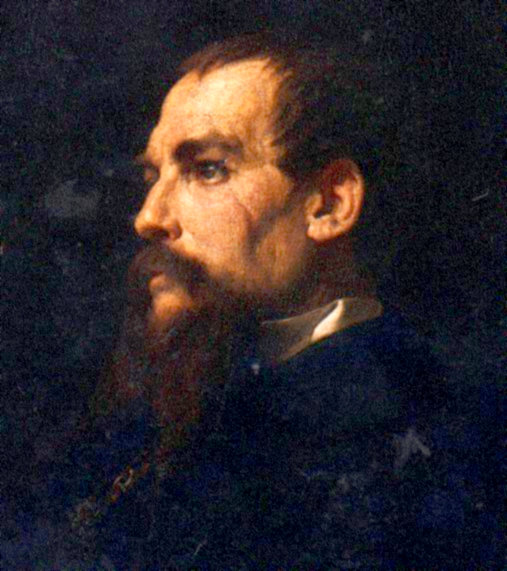
File:RichardFrancisBurton.jpeg

He spoke dozens of languages fluently and wrote scores of books. He was (possibly) the first Westerner to sneak into Mecca. The scar is from when he had a spear pass through his face during one of his many misunderstandings with native tribesmen. For more on Sir Richard, see here.


Saturday, August 3, 2013

Friday, August 2, 2013

Japan's Military Revival


WSJ

TOKYO—Masahisa Sato stood in a ballroom under a giant Japanese flag, reading to the after-work crowd from a letter a World War II kamikaze pilot sent his young daughter.

"Don't see yourself as a fatherless child. I will always be looking out for your safety," Mr. Sato quoted the pilot as writing before he flew his plane into a U.S. ship off the Philippines in 1944, with his daughter's favorite doll in the cockpit.

As the audience fell silent, Mr. Sato declared, his voice hoarse: "We have people we want to protect. We must have the resolve to hand this nation to the next generation."

Mr. Sato is no fringe militaristic crank. He is a top defense adviser to Prime Minister Shinzo Abe and a member of Japan's parliament running for re-election on Sunday. The vote will help determine the extent of Mr. Abe's grip on power—and his ability to push through an agenda to transform Japan's military to an extent unseen since the bitter defeat nearly 70 years ago.

...

The shift comes as brutal memories of war recede among the public. By the 2010 census, just 16% of Japan's population had been at least 5 years old when World War II ended.

On a recent evening, Mr. Sato, the soldier-turned-politician, was in a college lecture hall near the foot of Mount Fuji, giving a passionate speech about territories. The audience was a mix of local voters: retirees, middle-aged couples and men in work clothes.

Mr. Sato stood in front of a map of Japan pinned upside down, to emphasize how the Japanese archipelago looks like an obstacle that blocks China's advancement toward the vast Pacific Ocean. "Our resolve to defend our territory is now being tested," he said, as he discussed tensions with China over islands in the East China Sea.


Thursday, August 1, 2013

There is no education without reading


Excerpts from a nice blog post by Peter Lawler, a professor of government at Berry College.
American kids, more than ever, are stratified into those who read—those who have regular access to books, and those who don’t. I’m not talking here about basic literacy, but being open to the human good that is the enjoyment of literature. I could go on to explain that it’s the capacity to enjoy and really see what’s going on when words are deployed well that’s a virtually indispensable prerequisite for any position of leadership. But I want my main takeaway to be that reading is indispensable for beings with souls.
Our wealthy and sophisticated kids go to schools where books are still taken seriously (and sometimes very seriously), if only as the only way to become academically accomplished enough to be admitted to an elite college. Meanwhile, in ordinary or worse public schools—especially in our secondary schools—“real” books have been slowly disappearing. ...
If anyone were serious about reinvigorating the public schools as the great American vehicle of equality of opportunity, there would be more attention to having kids read “real books”—great literature—than ever. Liberally educated teachers would lovingly read Mark Twain or even Harry Potter aloud to our little children, to compensate for what they’re not getting at home. And lots of classroom time would be given over to children reading to each other. Kids would really be held accountable for what and how well they've read in grade after grade. I'm not denying for a moment that we can find this kind of attention in some of our very non-elite schools, and sometimes in surprising places. But if we're going to having national standards, nothing should be more important. The same compensatory bookishness should animate our nonselective colleges. But they, instead, follow the lead of the public schools and their educational experts by being about acquiring skills and competencies while bypassing the “content” found in this or that real book.
You’d wish the impulse behind developing a Common Core would be giving all American citizens access to the same intellectual and imaginative “content.” And my job would be a heck of a lot easier if all students came to college having read many of the same “real” books (and for that matter seen the same classic films).
For now, I can still rely on To Kill a Mockingbird, if not much else. That’s not quite true. Because I teach kids who’ve mostly been to Sunday School (which in much of the South is much more serious and bookish than public school), I can still rely somewhat on their Biblical literacy—or, more precisely, their love of or at least respect for one good book.