Showing posts with label RIP. Show all posts

Tuesday, January 31, 2017

Paul Ornstein, Psychoanalyst and Holocaust Survivor, RIP


NYT
"Paul Ornstein, who died at 92 on Jan. 19 in Brookline, Mass., could recall digging trenches for German troops as part of a forced labor battalion in Ukraine during World War II. After managing to escape, he hid for months in 1944 in the basement of the Swiss Embassy annex in Budapest.
Once the Red Army routed the Germans, he returned to his hometown in Hungary to search for his parents, his four siblings and his girlfriend, Anna Brunn, a distant cousin with whom he had fallen in love before the war, when he was 17 and she was barely a teenager.None appeared to have survived the Holocaust; he assumed they had been killed in death camps or in forced labor. Alone, he considered leaving his homeland behind and moving to Palestine. But with no way to get there, he instead enrolled in medical school in Hungary to pursue a career in psychoanalysis, inspired by his curiosity about what had motivated the anti-Semitism he experienced.   
Six months later, he learned that his father and Anna were still alive, liberated from separate concentration camps.
“As it happened, Anna returned from Auschwitz with her mother, and my father returned from Mauthausen during the same week,” Dr. Ornstein recalled in a memoir.
Reunited, he and Anna, who had lost two brothers and her father in the Holocaust, enrolled in the Heidelberg University School of Medicine in Germany, where their classmates included former Nazis.
They married in 1946 and moved to the United States, where they became major figures in the self-psychology movement, a provocative and evolving theory that challenged traditional Freudian analysis.
Dr. Ornstein embraced and advanced the theory, which encourages therapists to be more empathetic — “vicarious introspection,” Dr. Kohut called it. Instead of dealing primarily with individual guilt, sex and aggression, as Freudians do, self-psychology postulates that parents’ failure to support a child’s sense of self leads to later personality disorders.
Dr. Anna Ornstein said in an interview on Monday that she believed that her husband’s self-esteem, and hers, enabled them to survive and that it shaped their outlook on the academic discipline they chose.
“It was never easy to be a Jew in Hungary, but when the ultimate hell broke loose, we were extra fortunate in terms of the parenting, the care and love we had as children,” she said. “We had very sturdy self-esteem. As much as we were humiliated, we never felt demeaned because we came from a culture and emotional environment that we could be proud of. We were called ‘dirty Jews,’ but we knew who we really were.”



Friday, December 16, 2016

Larry Colburn, hero of My Lai, RIP

Hugh Thompson is in the center, and Larry Colburn is on the right. How many of you learned about these men in school? I wonder why not.


NYT

"Larry Colburn, who became an 18-year-old American hero when he intervened with two comrades to halt the massacre of unarmed Vietnamese civilians by United States soldiers in 1968, elevating an innocuous hamlet named My Lai into a watchword for the horrors of war, died on Tuesday at his home in Canton, Ga. He was 67.
The cause was liver cancer, his wife, Lisa, said.
Mr. Colburn was the last surviving member of a three-man helicopter crew that was assigned to hover over My Lai on Saturday morning, March 16, 1968, to identify enemy positions by drawing Vietcong fire.
Instead, the men encountered an eerie quiet and a macabre landscape of dead, wounded and weaponless women and children as a platoon of American soldiers, ostensibly hunting elusive Vietcong guerrillas, marauded among defenseless noncombatants.
The crew dropped smoke flares to mark the wounded, “thinking the men on the ground would come assist them,” Mr. Colburn told Vietnam Magazine in 2011.
“When we would come back to those we marked,” he said, “we’d find they were now dead.”
Audaciously and on his own initiative, the pilot, Chief Warrant Officer Hugh Thompson Jr., swooped down and landed the copter.
“Mr. Thompson was just beside himself,” Mr. Colburn recalled in an interview in 2010 for the PBS program “The American Experience.” “He got on the radio and just said, ‘This isn’t right, these are civilians, there’s people killing civilians down here.’ And that’s when he decided to intervene. He said, ‘We’ve got to do something about this, are you with me?’ And we said, ‘Yes.’ ”
Mr. Thompson confronted the officer in command of the rampaging platoon, Lt. William L. Calley, but was rebuffed. He then positioned the helicopter between the troops and the surviving villagers and faced off against another lieutenant. Mr. Thompson ordered Mr. Colburn to fire his M-60 machine gun at any soldiers who tried to inflict further harm.
“Y’all cover me!” Mr. Thompson was quoted as saying. “If these bastards open up on me or these people, you open up on them. Promise me!”
“You got it boss,” Mr. Colburn replied. “Consider it done.”
Mr. Thompson, Mr. Colburn and Glenn Andreotta, the copter’s crew chief, found about 10 villagers cowering in a makeshift bomb shelter and coaxed them out, then had them flown to safety by two Huey gunships. They found an 8-year-old boy clinging to his mother’s corpse in an irrigation ditch and plucked him by the back of his shirt and delivered him to a nun in a nearby hospital.
Crucially, they reported what they had witnessed to headquarters, which ordered a cease-fire. By then, as many as 500 villagers had been killed."


Saturday, November 5, 2016

Wheel of Fortune (1952) -- Kay Starr (1922 to 2016, RIP)

St. Petersburg, Florida (1952)


The wheel of fortune
Goes spinning around
Will the arrow point my way
Will this be my day
Oh, wheel of fortune
Please don't pass me by
Let me know the magic of
A kiss and a sign
While the wheel is spinning, spinning, spinning
I'll not dream of winning fortune or fame
While the wheel is turning, turning, turning
I'll be yearning, yearning
For love's precious flame
Oh, wheel of fortune
I'm hoping somehow
If you'll ever smile on me
Please let it be now
While the wheel is spinning, spinning, spinning
I'll not dream of winning fortune or fame
While the wheel is turning, turning, turning
I'll be yearning, yearning
For love's precious flame
Oh, wheel of fortune
I'm hoping somehow
If you ever smile on me
Please let it be now


Saturday, December 5, 2015

Tea for Two -- Beverly Kenney (1956)

On April 13, 1960, Miss Kenney died by suicide (an overdose of alcohol and Seconal). She was 28 years old. I am glad to have learned that her work is still much admired in Japan.


I'm discontented with homes that I've rented
So I have invented my own.
Darling, this place is lovely oasis
Where life's weary taste is unknown

Far from the crowded city
Where flowers pretty caress the stream
Cozy to hide in, to live side by side in,
Don't let it apart in my dream

Picture me upon your knee
Just tea for two
And two for tea
Just me for you
And you for me alone

Nobody near us to see us or hear us
No friends or relations
On weekend vacations
We won't have it known
That we own a telephone, dear

Day will break and I'll wake
And start to bake a sugar cake
For you to take for all the boys to see

We will raise a family
A boy for you
And a girl for me
Can't you see how happy we would be

Picture you upon my knee
Just tea for two
And two for tea
Just me for you
And you for me alone

Nobody near us to see us or hear us
No friends or relations
On weekend vacations
We won't have it known
That we own a telephone, dear

Day will break, you'll wake
And start to bake a sugar cake
For you to take for all the boys to see

We will raise a family
A boy for you
And a girl for me
Can't you see how happy we would be


Monday, November 16, 2015

René Girard, RIP


Real Clear Religion
"René Girard, one of the most influential Catholic philosophers in the world, died last week at the age of 91. Born in Avignon and a member of the illustrious Academie Francaise, Girard nevertheless made his academic reputation in the United States, as a professor at Indiana University, Johns Hopkins University, and Stanford University.
There are some thinkers that offer intriguing ideas and proposals, and there is a tiny handful of thinkers that manage to shake your world. Girard was in this second camp.
In a series of books and articles, written across several decades, he proposed a social theory of extraordinary explanatory power. Drawing inspiration from some of the greatest literary masters of the West-Dostoevsky, Shakespeare, Proust among others -- Girard opined that desire is both mimetic and triangular. He meant that we rarely desire objects straightforwardly; rather, we desire them because others desire them: as we imitate (mimesis) another's desire, we establish a triangulation between self, other, and object.
If this sounds too rarefied, think of the manner in which practically all of advertising works: I come to want those gym shoes, not because of their intrinsic value, but because the hottest NBA star wants them. Now what mimetic desire leads to, almost inevitably, is conflict. If you want to see this dynamic in the concrete, watch what happens when toddler A imitates the desire of toddler B for the same toy, or when dictator A mimics the desire of dictator B for the same route of access to the sea.
The tension that arises from mimetic desire is dealt with through what Girard called the scapegoating mechanism. A society, large or small, that finds itself in conflict comes together through a common act of blaming an individual or group purportedly responsible for the conflict. So for instance, a group of people in a coffee klatch will speak in an anodyne way for a time, but in relatively short order, they will commence to gossip, and they will find, customarily, a real fellow feeling in the process.
What they are accomplishing, on Girard's reading, is a discharging of the tension of their mimetic rivalry onto a third party. The same dynamic obtains among intellectuals. When I was doing my post-graduate study, I heard the decidedly Girardian remark: "the only thing that two academics can agree upon is how poor the work of a third academic is!" Hitler was one of the shrewdest manipulators of the scapegoating mechanism. He brought the deeply divided German nation of the 1930's together precisely by assigning the Jews as a scapegoat for the country's economic, political, and cultural woes. Watch a video of one of the Nuremberg rallies of the mid-thirties to see the Girardian theory on vivid display.
Now precisely because this mechanism produces a kind of peace, however ersatz and unstable, it has been revered by the great mythologies and religions of the world and interpreted as something that God or the gods smile upon. Perhaps the most ingenious aspect of Girard's theorizing is his identification of this tendency. In the founding myths of most societies, we find some act of primal violence that actually establishes the order of the community, and in the rituals of those societies, we discover a repeated acting out of the original scapegoating. For a literary presentation of this ritualization of society-creating violence, look no further than Shirley Jackson's masterpiece "The Lottery."
The main features of this theory were in place when Girard turned for the first time in a serious way to the Christian Scriptures. What he found astonished him and changed his life. He discovered that the Bible knew all about mimetic desire and scapegoating violence but it also contained something altogether new, namely, the de-sacralizing of the process that is revered in all of the myths and religions of the world. The crucifixion of Jesus is a classic instance of the old pattern. It is utterly consistent with the Girardian theory that Caiaphas, the leading religious figure of the time, could say to his colleagues, "Is it not better for you that one man should die for the people than for the whole nation to perish?" In any other religious context, this sort of rationalization would be valorized. But in the resurrection of Jesus from the dead, this stunning truth is revealed: God is not on the side of the scapegoaters but rather on the side of the scapegoated victim. The true God in fact does not sanction a community created through violence; rather, he sanctions what Jesus called the Kingdom of God, a society grounded in forgiveness, love, and identification with the victim. Once Girard saw this pattern, he found it everywhere in the Gospels and in Christian literature. For a particularly clear example of the unveiling process, take a hard look at the story of the woman caught in adultery.
In the second half of the 20th century, academics tended to characterize Christianity -- if they took it seriously at all -- as one more iteration of the mythic story that can be found in practically every culture. From the Epic of Gilgamesh to Star Wars, the "mono-myth," to use Joseph Campbell's formula, is told over and again. What Girard saw was that this tired theorizing has it precisely wrong. In point of fact, Christianity is the revelation (the unveiling) of what the myths want to veil; it is the deconstruction of the mono-myth, not a reiteration of it -- which is exactly why so many within academe want to domesticate and de-fang it.
The recovery of Christianity as revelation, as an unmasking of what all the other religions are saying, is René Girard's permanent and unsettling contribution."


Tuesday, September 8, 2015

Robert Conquest, RIP


New Criterion
"The opening line in most obituaries of Robert Conquest, who died on August the third, described him as a “historian and poet.” That would be a capacious enough description for most men of letters. In Tom Stoppard’s The Invention of Love, Charon keeps A. E. Housman waiting on the banks of the River Styx for a second arrival since he is expecting two people, “a poet and a scholar,” until Housman says shyly: “I think that must be me.” In Bob’s case Charon would have been waiting for a historian, a poet, a novelist, a satirist, a critic, a diplomat, a strategist, a soldier, a social and political theorist, a limerickist, and of course a scholar—and I have almost certainly left out some of Bob’s other professional identities. Charon probably brought along a second boat."


Monday, August 31, 2015

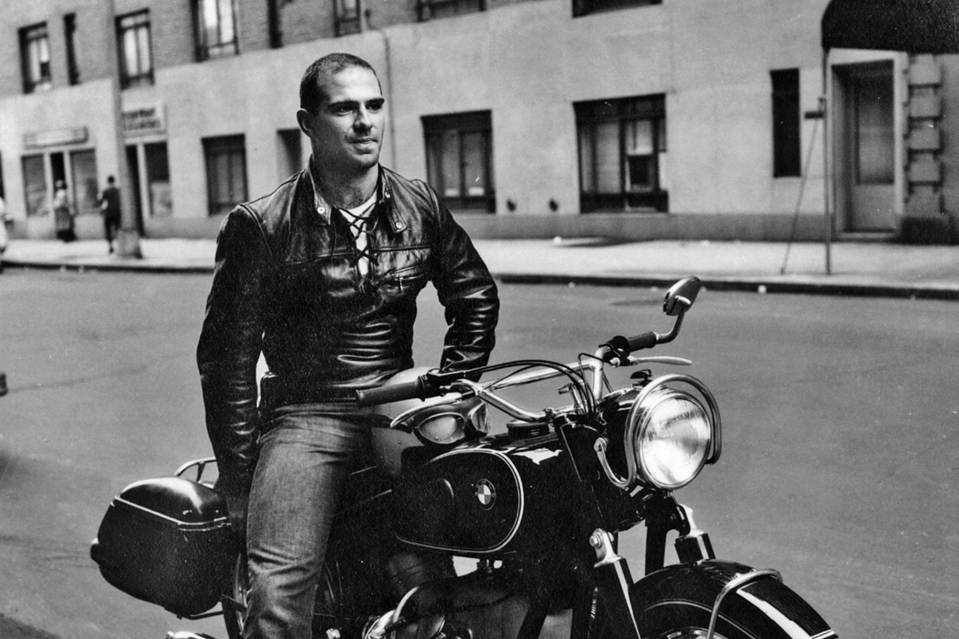
Oliver Sacks, RIP

Oliver Sacks, Greenwich Village, 1960


Telegraph (UK)


"Oliver Wolf Sacks was born on July 9 1933 into a Jewish family in Cricklewood, north London, the youngest of four sons of a pair of wealthy physicians. He had an idyllic early childhood, waited on by an army of servants and spoilt by a vast extended family of remarkable intellectual brilliance.
 ...
This idyll was rudely shattered by the outbreak of war when young Oliver, then aged six, and his elder brother Michael, were evacuated to a Midlands boarding school called Braefield. There they were subjected to a regime of unrelenting cruelty by a headmaster who was “unhinged by his own power ... vicious and sadistic”.
The experience drove his brother mad and robbed Oliver of his faith in God. He was left with a host of phobias. His response was to take refuge in the unthreatening and impersonal world of science and mathematics. One of his aunts, a botanist, took him to Kew Gardens and the Natural History Museum, where dioramas of archaic plants and ferns, including the Jurassic cycads, became his “dreamscapes”, evoking “an Eden of the remote past.”
But what really caught his imagination was chemistry. It was one of his mother’s 17 siblings, his uncle Dave (or “Uncle Tungsten”) the owner of a light bulb factory in Farringdon, who opened his nephew’s eyes to the magical world of atoms and molecules. Back home, young Oliver was given a free rein by his busy parents to conduct his own experiments.
In a makeshift laboratory in the family home, he proceeded to produce clouds of noxious-smelling chemicals, making “volcanoes” with ammonium dichromate, setting fire to the garden and, on one occasion, burning off his brother’s eyebrows. At St Paul’s School, he shared his passion with Jonathan Miller who accompanied him when on one memorable occasion he dropped 3lb of pure sodium into Highgate Ponds.
Sacks read deeply, delving into 18th and 19th-century texts to understand how the sciences had evolved. His great heroes were Humphry Davy, Marie Curie and Dmitri Mendeleev, the inventor of the periodic table – a chemical chart which gave the young Sacks intimations of “the transcendent power of the human mind”.
But Oliver’s mother, an obstetrician-gynaecologist, was determined that her son should follow her into the medical profession and took pains to ensure that he became acquainted with anatomy by bringing home malformed foetuses for him to dissect, an exercise that filled him with revulsion. “She never perceived, I think, how distressed I became,” Sacks wrote, “and probably imagined that I was as enthusiastic as she was.”
Later, when he was 14, she arranged his first experience of dissecting a human corpse – the body of a girl . “Delight in understanding and appreciating anatomy was lost, for the most part, in the horror of the dissection,” he recalled. “I did not know if I would ever be able to love the warm, quick bodies of the living after facing, smelling and cutting the formalin-reeking corpse of a girl my own age.”  
Yet, Sacks did become interested, and went on to take degrees in Physiology, Biology and Medicine at Queen’s College, Oxford, and at Middlesex Hospital Medical School, later taking junior medical posts at the hospital.
By this time he had become fascinated by neurology and in 1960 moved to Mount Zion Hospital in San Francisco to study the subject. In California he rode with the Hells Angels Motorcycle Club and won a state championship for weightlifting. "


Monday, July 6, 2015

Marva Collins, RIP

10,000 people like her, starting their own private schools, could change the entire country in a single generation.

"Marva Collins, a former substitute teacher whose success at educating poor black students in a private school she founded made her a candidate for secretary of education and the subject of a television movie, died on Wednesday in a hospice near her home in South Carolina. She was 78.
Her death was confirmed by Hospice Care of the Lowcountry in Bluffton, S.C.
After working as a substitute teacher for 14 years in Chicago public schools, Ms. Collins cashed in her $5,000 in pension savings and opened Westside Preparatory School in 1975. The school originally operated in the basement of a local college and then, to be free of red tape (the same reason she said she had refused federal funds), in the second floor of her home.
She began with four students, including her daughter, charging $80 a month in tuition. Enrollment at the school, on Chicago’s South Side, grew to more than 200, in classes from prekindergarten through eighth grade. It remained in operation for more than 30 years.
Ms. Collins set high academic standards, emphasized discipline and promoted a nurturing environment. She taught phonics, the Socratic method and the classics and, she insisted, never expected her students to fail.
“Kids don’t fail,” she once said. “Teachers fail, school systems fail. The people who teach children that they are failures — they are the problem.”


Wednesday, March 4, 2015

COL Anthony B. Herbert, Ph.D. in clinical psychology, RIP


NYT
"During World War II, he ran away to join the Marines, but was sent home the next day because he was just 14. He enlisted in the Army three years later and, bemedaled with four Silver Stars, four Bronze Stars and four Purple Hearts, became the most decorated enlisted man during the Korean War. He volunteered for service in Vietnam, where, as a lieutenant colonel, he earned a Silver Star, two Bronze Stars, an Air Medal and an Army Commendation Medal in only 58 days of combat.
And then, on April 4, 1969, Anthony B. Herbert, the Army poster boy from the Pennsylvania coalfields, was abruptly relieved of his command.
Colonel Herbert said he had been sacked for exposing brutality against civilians by American troops
...
[During the Korean War, he was s]elected by the Army for a delegation of distinguished soldiers representing the United Nations, he met President Harry S. Truman and the former first lady Eleanor Roosevelt, who urged him to get a college degree.
After marrying Marygrace Natale, who survives him along with his daughter, Toni, and two grandchildren, he graduated from the University of Pittsburgh with a degree in English, re-enlisted again, became commander of an Army Ranger unit and served as an R.O.T.C. instructor at the University of Georgia, where he earned a master’s in psychology.
In August 1968, he joined the 173rd Airborne Brigade stationed in the central highlands of South Vietnam. It was there as commander of the Second Battalion of the 503rd Infantry, he said, that he witnessed what he described as eight war crimes, including serial executions of detainees and water torture of a prisoner.
He reported the offenses to the commanding general of the 173rd Airborne and his deputy. The next day, Colonel Herbert was relieved of his command and dealt a devastating efficiency report.
He then turned around and filed charges against the officers and challenged the efficiency report, and it was eventually withdrawn. He was later promoted, and, after being wounded 14 times, he retired early from the Army in 1972.
But on Feb. 4, 1973, in a segment produced for “60 Minutes” by Barry Lando, the reporter Mike Wallace portrayed Colonel Herbert as a liar who had revealed war crimes only after the My Lai massacre became public late in 1969 and who was guilty of brutality himself.
He sued for $44 million in a case that would inch forward for 12 years.
...
While the case unfolded, Colonel Herbert, in retirement from the military, earned a doctorate in psychology from the University of Georgia in 1975. He later practiced privately in Colorado, served as an efficiency consultant to state legislatures and wrote several other books.
Books, indeed, had become dear to him. Not long before he resigned from the Army, he was stuck in a humdrum recruiting job, where, he said at the time, at least “I get to do a lot of reading.”
“Books I never had time for before,” he said. “Books like ‘Catch 22.’ ”"

The Washington Post obit is even better:

"His 1973 book “Soldier” was reportedly used as inspiration by actor Robert Duvall, who played an air cavalry lieutenant colonel — the one who says, “I love the smell of napalm in the morning” — in the 1979 film “Apocalypse Now.”
People tell me I should see ‘Apocalypse Now’ because the Duvall character is modeled after me, and others tell me the Brando character, Kurtz, is modeled after me,” Dr. Herbert told The Post in 1979. “I’m not Brando; Brando’s not me . . .
“And I don’t want to see any [expletive] war movies. If I want to see a movie, I go to ‘The Sound of Music.’ I’ve seen it 31 times.”"

Here's an interesting article on Dr. Herbert's involvement in a missing person's case (when he was 80 years old).


Thursday, November 27, 2014

RIP: John T. Downey, former prisoner of the Red Chinese


Washington Post

"HARTFORD, Conn. — John T. Downey, a former CIA agent who survived more than 20 years in Chinese prisons during the Cold War before becoming a Connecticut judge, died Monday. He was 84.
Downey was diagnosed with cancer a month ago and died at a hospice facility in Branford, according to his son, Jack Downey, of Philadelphia.
The elder Downey had graduated from Yale University and joined the Central Intelligence Agency a year before his plane was shot down during a botched cloak-and-dagger flight into China in November 1952. He spent the next 20 years, three months and 14 days in Chinese prisons. He was released in March 1973 shortly after President Richard Nixon publicly acknowledged Downey’s CIA connection.
After returning to the United States, he graduated from Harvard Law School and was appointed to the Connecticut bench in 1987.
 ...
Downey and Fecteau [his fellow intelligence officer] were hauled off to prison, interrogated and isolated in separate cells. Each spent long stretches in solitary confinement.
After their release, Fecteau said they would visit occasionally during Downey’s time in law school and split a pint of ice cream, because neither of them drank. He said he admired his friend’s mental strength during their time in captivity. 
He never weakened. He never felt sorry for himself,” Fecteau, 87, said Monday. “What happened happened and he lived with it as best he could, and I liked that.”"


Great story. Hey, Washington Post! He was a United States Intelligence Officer, not a "CIA agent." The guy he was going to pick up was an "agent" [i.e., a foreign national working clandestinely for the U.S.]. I will settle for "CIA officer." Decades of imprisonment in China, by the way, is what happened to Paul Christopher in the excellent spy novels by Charles McCarry. Christopher also handled it with aplomb.


Friday, August 22, 2014

Dickie Attenborough, RIP

 
NYT
"It was not until he appeared with his friend Steve McQueen and a sterling ensemble cast in the 1963 war film “The Great Escape,” his first Hollywood feature, that he found a trans-Atlantic audience. His role, as a British officer masterminding an escape plan from a German prisoner-of-war camp, was integral to one of the most revered and enjoyable of all World War II films."


Thursday, July 3, 2014

Louis Zamperini, survivor of Japanese POW camp, RIP

Zamperini_1

LA Times

[Louis] Zamperini was the "Torrance Tornado," the tough kid turned track star who set a national high school record for running the mile. In 1936, he was known as "The Zamp," the 18-year-old USC standout who ran at the Berlin Olympics, where his roommate was Jesse Owens. In 1943, he was Lt. Zamperini, a bombardier on a B-24 Liberator, who, along with 10 other crew members, fell off the map on a May 27 mission over the Pacific.
When President Franklin D. Roosevelt sent his parents a formal condolence note in 1944, he had no idea that Zamperini was still alive and living a nightmare in a Japanese prison camp. For 47 days, Zamperini had drifted on a life raft, fighting off sharks and starvation with two other crew members, one of whom died. Picked up by a Japanese patrol boat, the two survivors were beaten, tortured and humiliated for more than two years.

Wednesday, April 2, 2014

Jeremiah Denton, RIP


WND

"In his book “When Hell Was In Session,” Adm. Jeremiah Denton – who passed away Friday at age 89 – described a life-changing personal encounter he had with God while being tortured in a rodent-infested North Vietnamese prison cell:
Our resistance remained resolute, and in the middle of October, Lump [a senior prison official] demanded information from me on camp communications. He told me they knew I was inciting others to resist, and he lost his composure for the first time, threatening me with torture if I didn’t cooperate. 
I refused, and a special rig was devised for me in my cell. I was placed in a sitting position on a pallet, with my hands tightly cuffed behind my back and my feet flat against the wall. Shackles were put on my ankles, with the open ends down, and an iron bar was pushed through the eyelets of the shackles. The iron bar was tied to the pallet and the shackles in such a way that when the rope was drawn over a pulley arrangement, the bar would cut into the backs of my legs, gradually turning them into a swollen, bloody mess. 
I couldn’t move my legs; I couldn’t turn my ankles; I had to remain in a sitting position at all times with my legs absolutely straight. The pulley was used daily to increase the pressure, and the iron bar began to eat through the Achilles tendons on the backs of my ankles. 
After five days and nights in the rig, I decided to give them something harmless, hoping that the gesture would allow them to save face and release me. I wrote that we had talked to other prisoners while pretending to talk to the guards, and had also shouted under the doors. Lump shrugged and ordered me back into the rig. He was angered by my attempt to deceive him and determined to break me. 
The punishment was so gory that each day Happy [a prison guard], after tightening the ropes, would still be weeping when he went to the next cell to let Mulligan out to empty his bucket. For five more days and nights, I remained in the rig. My back got one respite in that time. I managed to lean against my bucket, which I had maneuvered into position on the pallet, and relieve the strain enough to get some sleep. Even a roving guard took some pity. He saw me leaning against the bucket but didn’t report it for 18 hours. By the fifth morning, I was nearing despair. I offered myself to God with an admission that I could take no more on my own. Tears ran down my face as I repeated my vow of surrender to Him. Strangely, as soon as I made the vow, a deep feeling of peace settled into my tortured mind and pain-wracked body, and the suffering left me completely. It was the most profound and deeply inspiring moment of my life. 
A few minutes later, Happy and another guard came into my cell and the two of them began pulling on the rope. Blood began to flow heavily from my legs. I felt nothing, though I still bear the scars and have frequent spasms in my legs from the ordeal.
“I still bear the scars … frequent spasms in my legs,” wrote Denton.

Which perhaps is why, close to five decades later when my daughter and I were walking through the Jamestown Settlement museum with Jeremiah Denton and his wife, Mary (they had graciously invited us to visit them in Williamsburg, Va., where we were overnight house guests), Jeremiah Denton couldn’t bend down and tie his shoelaces that had become untied. Mary knelt down and tied them.

Jeremiah Denton, or Admiral Denton or Sen. Denton (or, as he preferred to be called, “Jerry,” though I always had a hard time calling him that to his face, even when he insisted) was a hero not just because he was imprisoned in filthy prison cells and tortured for his country. Denton, along with the other heroic Americans POWs – many of them, like Denton, Naval aviators shot down over enemy territory – are especially worthy of honor because they dealt with their horrendous mistreatment so nobly, so admirably, so defiantly, like the natural aristocrats of the human race that they were and are.
It’s hard to have any idea what I’m talking about without reading Denton’s book, “When Hell Was In Session.” It has affected me – in a lasting way – more than almost any other book I’ve ever read."


Here's that famous clip of Adm. Denton blinking T-O-R-T-U-R-E in Morse Code during a North Vietnamese propaganda interview:


Tuesday, November 12, 2013

Nalini "Thin Slices" Ambady, RIP

New York Times


Nalini Ambady, a social psychologist whose research on the surprising accuracy of first impressions was popularized by Malcolm Gladwell in “Blink,” his best-selling nonfiction book of 2005, died on Oct. 28 in Boston. She was 54.       

Her death, from leukemia, was announced by Stanford University, where she had taught since 2011.
In “Blink,” subtitled “The Power of Thinking Without Thinking,” Mr. Gladwell explored the psychology of intuition, snap judgments and gut reactions. The book prominently features Professor Ambady’s work, which centered on the cognitive processes underpinning intuition. Her findings are notable for upending long-held prejudices about the validity of first impressions.
To make snap judgments, Professor Ambady found, people draw unconsciously on a series of nonverbal cues, including facial expression and body language — things a poker player might call “tells” — which determine their initial response to people and situations.
In an article published in 1992 in the journal Psychological Bulletin, she and the psychologist Robert Rosenthal coined the term “thin slices” to describe these nonverbal snapshots. Significantly, they found that information gleaned from thin slices resembles information garnered from long observation to a far greater degree than supposed.
“In 40 milliseconds, people can accurately judge what we are saying with our expression,” Professor Ambady told The New York Times in 2007.
The upshot, for good or ill, helps determine a welter of daily social choices, including whom one sits next to on the bus and whom one hires for a job.
In a seminal experiment they reported in a 1993 article, Professors Ambady and Rosenthal had students view soundless 10-second videos of professors teaching. The students were asked to rate each professor, none of whom they knew, for qualities including honesty, likability, competence and professionalism.
When their responses were compared with evaluations from students who had studied with those professors for an entire semester, they correlated to a striking degree. The article, published in The Journal of Personality and Social Psychology, reported that the correlation held even when the videos were trimmed to only two seconds.
 
The full-text of the "thin slices" college professor ratings article can be found here.
 
This Psychology Today article refers to a study by Ambady and Rule that showed that college undergraduates can differentiate the faces of Mormons from non-Mormons with 60% accuracy (chance = 50%). There's also interesting stuff about gaydar, evolved mechanisms for spotting criminals, etc.


Friday, June 21, 2013

James Gandolfini, RIP

I'm pretty sure that David Chase, creator of The Sopranos, said at one time that he had had a lot of psychotherapy. Well, he was paying attention during those sessions because the psychotherapy scenes in that series are top notch. This is the best one.


That's from the second season. Got it, viewer? That psychopath you are living vicariously through is an unredeemable monster who is warping the souls of everyone around him. There's no happy ending possible for A.J., Meadow, or Carmela -- they are all damned. Dr. Melfi is wasting her time trying to help Tony because psychotherapy only works if the patient has a soul. (She figured that out in the last season.)

If we had more psychotherapists like Dr. Krakower, the mental health profession itself would be redeemed. Call things what they are, and don't let anyone else do otherwise.


[Begin transcript]

Carmela: Every marriage has problems.

Krakower: Is he seeing other women?

Carmela: "Yeah, you can make that plural. Yes, he sees other women. I sort of look the other way. I want to help him."

Krakower: "Do you? Moments ago you used the word divorce."

Carmela: "I said I was considering divorce. I may be overstepping my bounds here, but you are Jewish, aren't you?"

Krakower: "Is that relevant?"

Carmela: "Well, us Catholics, we place a great deal of stock in the sanctity of the family. And I am not sure that your people--"

Krakower: "I've been married 31 years."

Carmela: "Well, then, you know. How difficult it can be. He's a good man, a good father."

Krakower: "You tell me he's a depressed criminal. Prone to anger. Serially unfaithful. Is that your definition of a good man?"

Carmela: "I thought psychiatrists weren't supposed to be judgmental."

Krakower: "Many patients want to be excused for their current predicament. Because of events that occurred in their childhood. That's what psychiatry has become in America. Visit any shopping mall or ethnic pride parade. Witness the results."

Carmela: "What we say in here stays in here, right?"

Krakower: "By ethical code and by law."

Carmela: "His crimes. They are, uh, organized crimes."

Krakower: "The mafia."

Carmela begins sobbing. "Oh Jesus." She dabs at her face with a tissue. "Oh so, so what? So what? He betrays me every week with these whores."

Krakower: "Probably the least of his misdeeds."

Carmela shifts forward, as if to leave.

Krakower: "You can leave now, or you can you stay and hear what I have to say."

Carmela: "Well, you're gonna charge the same anyway."

Krakower: "I won't take your money."

Carmela: "That's a new one."

Krakower: "You must trust your initial impulse and consider leaving him. You'll never be able to feel good about yourself. You'll never be able to qualm the feelings of guilt and shame that you talked about. As long as you're his accomplice."

Carmela: "You're wrong about the accomplice part."

Krakower: "Are you sure?"

Carmela: "All I do is make sure he's got clean clothes in his closet and dinner on his table."

Krakower: "So 'enabler' would be a more accurate job description for you than 'accomplice'. My apologies."

Carmela: "So . . . You think I need to define my boundaries more clearly. Keep a certain distance. Not internalize my--"

Krakower: "What did I just say?"

Carmela: "Leave him."

Krakower: "Take only the children, or what's left of them, and go."

Carmela: "My priest said I should try to work with him. Help him to be a better man."

Krakower: "How's that going?"

Carmela: "I--"

Krakower: "Have you ever read Crime and Punishment? Dostoyevsky. It's not an easy read. It's about guilt and redemption. And were your husband to turn himself him, read this book, and reflect on his crimes every day for seven years in his cell, then he might be redeemed."

Carmela: "I'd have to, uh, get a lawyer. Find an apartment. Arrange for child support."

Krakower: "You're not listening. I am not charging you because I won't take blood money. And you can't either. One thing you can never say, that you haven't been told."

Carmela: "I see. You're right. I see."
 
[End transcript]