Showing posts with label philosophy. Show all posts

Friday, March 3, 2017

"Suicide is an action of the most unqualified and sordid egotism"


GIACOMO LEOPARDI (1798-1837)


Ethics of Suicide

"Whether suicide be reasonable, or our compromise with life unreasonable, the former is certainly a horrible and inhuman action. It were better to follow Nature, and remain man, than act like a monster in following Reason. Besides, ought we not to give some thought to the friends, relatives, acquaintances, and people with whom we have been accustomed to live, and from whom we should thus separate for ever? And if the thought of such separation be nothing to us, ought we not to consider their feeling? They lose one whom they loved and respected; and the atrocity of his death enhances their grief. I know that the wise man is not easily moved, nor yields to pity and lamentation to a disquieting extent; he does not abase himself to the ground, shed tears immoderately, nor do other similar things unworthy of one who clearly understands the condition of humanity. But such fortitude of soul should be reserved for grievous circumstances that arise from nature, or are unavoidable; it is an abuse of fortitude to deprive ourselves for ever of the society and conversation of those who are dear to us. He is a barbarian, and not a wise man, who takes no account of the grief experienced by his friends, relations, and acquaintances. He who scarcely troubles himself about the grief his death would cause to his friends and family is selfish; he cares little for others, and all for himself. And truly, the suicide thinks only of himself. He desires nought but his personal welfare, and throws away all thought of the rest of the world. In short, suicide is an action of the most unqualified and sordid egotism, and is certainly the least attractive form of self-love that exists in the world. 
Finally, my dear Porphyrius, the troubles and evils of life, although many and inevitable, when, as in your case, unaccompanied by grievous calamity or bodily infirmity, are after all easy to be borne, especially by a wise and strong man like yourself. And indeed, life itself is of so little importance, that man ought not to trouble himself much either to retain or abandon it; and, without thinking greatly about it, we ought to give the former instinct precedence over the latter. 
If a friend begged you to do this why should you not gratify him? 
Now I earnestly entreat you, dear Porphyrius, by the memory of our long friendship, put away this idea. Do not grieve your friends, who love you with such warm affection, and your Plotinus, who has no dearer nor better friend in the world. Help us to bear the burden of life, instead of leaving us without thought. Let us live, dear Porphyrius, and console each other. Let us not refuse our share of the suffering of humanity, apportioned to us by destiny. Let us cling to each other with mutual encouragement, and hand in hand strengthen one another better to bear the troubles of life. Our time after all will be short; and when death comes, we will not complain. In the last hour, our friends and companions will comfort us, and we shall be gladdened by the thought that after death we shall still live in their memory, and be loved by them."





Tuesday, February 28, 2017

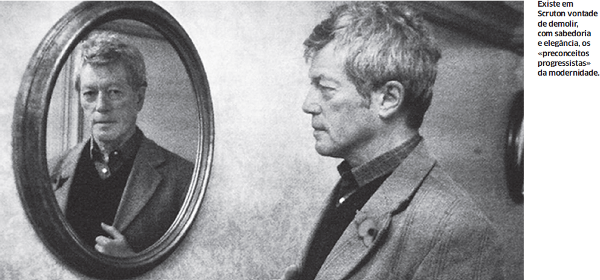
Human Society is nothing but Resentment, Desire for Orthodoxy, and Scapegoating -- Roger Scruton (2014)

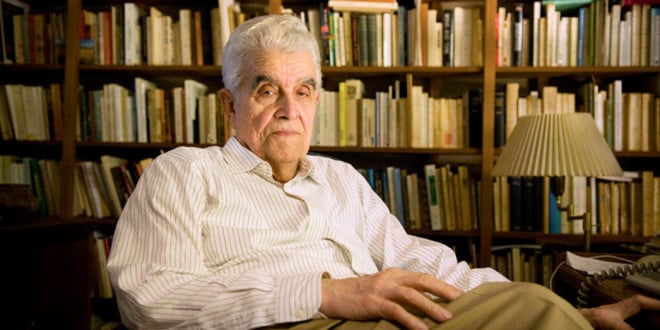
Best image I could find of him. He should hire a professional photographer (like I'm guessing Camus did). His internet image gallery needs some work.


Roger Scruton

"People, in general, need managing. And I think all political philosophy needs, in the end, to reflect on what it is in human nature that creates this need for managing. There are certain aspects of the human condition which people are reluctant to think about. You are all reluctant to think about things in yourselves which you know not to be agreeable to yourself and to others. But there are also general features of the human condition which we find difficult to think about.
The first is envy and resentment. People feel resentment towards the goods, the status, the talents of others, and this is normal. Nietzsche, the German nineteenth-century philosopher who I’m sure you’ve encountered in one aspect or another, thought that ressentiment—he used the French word for reasons of his own—was the default position of human communities. In the end, it’s resentment that makes the world go round, and it’s why the world is so awful. And Nietzsche didn’t really belong to the world himself. He was a curmudgeonly kind of guy. He advocated a much more solitary approach to things than most of you would be able to manage. Leaving aside his so-called ‘positive philosophy,’ I think most people would recognize that he’s onto something. Sure, people resent each other, and one thing we most resent in others is the fact that they are doing better than we are. And that resentment is going to be always there—especially when we’re in close competition for something that we really want. We’re in competition for, say, a job or a lover or a social position or status, and we see the other person get it. And we can’t control what we feel.
There’s another part of people that needs managing, however. This was much more interesting to John Stuart Mill, and it is the desire for orthodoxy. Mill believed that orthodoxy, rather than freedom of opinion, is the default position for human societies. He believed that orthodoxies prevail and that we take refuge in them. We know that if we repeat what everybody else is saying, even if we don’t believe it to be entirely true, nevertheless we’re safe, we’re not going to be attacked. And to stand out and say the thing that is generally disapproved of, even if it’s staring everybody in the face, requires courage.
Another feature of the human condition, which has been much emphasized by the French philosopher, critic, and anthropologist René Girard, is that we have an inbuilt need for scapegoating, for persecuting the heretic. If society’s in a difficult position, people are at loggerheads with each other, they’re not able to agree about some issue of the day, or perhaps there’s some threat facing them, it helps in a way to find a person to blame. It doesn’t matter that he isn’t actually to blame; we get hold of him and we persecute him, and we all unite against him and we all feel good about it. We all feel that we found the trouble and we’re getting rid of it. This is what Hitler did, of course, with the Jews in Germany in the inter-war period: he said, “Don’t worry. The reason our society is in total chaos is not because I’m in charge of it. On the contrary, it’s because of all those Jews who are uniting against us, conspiring to undermine the pure behavior of the Aryan majority. So we’re going to persecute them and get rid of them.” And I think if you look back over history, you will see scapegoating as one of the most important features of human society.
And all these three features point to the fact that forgiveness is hard for human communities and hard for individuals. It is difficult to forgive people for being better than yourself, to forgive people for standing out with an opinion of their own, to forgive people for just being the heretic. And penitence is rare. People don’t very often confess to their faults, nor do they undergo any kind of penitence or repentance in order to atone for them or to make amends."


Monday, February 20, 2017

Studies in Pessimism -- Arthur Schopenhauer (1892)

Happy Monday!


Studies in Pessimism
"[W]e generally find pleasure to be not nearly so pleasant as we expected, and pain very much more painful.
The pleasure in this world, it has been said, outweighs the pain; or, at any rate, there is an even balance between the two. If the reader wishes to see shortly whether this statement is true, let him compare the respective feelings of two animals, one of which is engaged in eating the other.
The best consolation in misfortune or affliction of any kind will be the thought of other people who are in a still worse plight than yourself; and this is a form of consolation open to every one. But what an awful fate this means for mankind as a whole!
We are like lambs in a field, disporting themselves under the eye of the butcher, who chooses out first one and then another for his prey. So it is that in our good days we are all unconscious of the evil Fate may have presently in store for us -- sickness, poverty, mutilation, loss of sight or reason.
No little part of the torment of existence lies in this, that Time is continually pressing upon us, never letting us take breath, but always coming after us, like a taskmaster with a whip. If at any moment Time stays his hand, it is only when we are delivered over to the misery of boredom.
But misfortune has its uses; for, as our bodily frame would burst asunder if the pressure of the atmosphere were removed, so, if the lives of man were relieved of all need, hardship and adversity; if everything they took in hand were successful, they would be so swollen with arrogance that, though they might not burst, they would present the spectacle of unbridled folly -- nay, they would go mad. And I may say, further, that a certain amount of care or pain or trouble is necessary for every man at all times. A ship without ballast is unstable and will not go straight.
Certain it is that work, worry, labour and trouble, form the lot of almost all men their whole life long. But if all wishes were fulfilled as soon as they arose, how would men occupy their lives? what would they do with their time? If the world were a paradise of luxury and ease, a land flowing with milk and honey, where every Jack obtained his Jill at once and without any difficulty, men would either die of boredom or hang themselves; or there would be wars, massacres, and murders; so that in the end mankind would inflict more suffering on itself than it has now to accept at the hands of Nature.
In early youth, as we contemplate our coming life, we are like children in a theatre before the curtain is raised, sitting there in high spirits and eagerly waiting for the play to begin. It is a blessing that we do not know what is really going to happen. Could we foresee it, there are times when children might seem like innocent prisoners, condemned, not to death, but to life, and as yet all unconscious of what their sentence means. Nevertheless, every man desires to reach old age; in other words, a state of life of which it may be said: "It is bad to-day, and it will be worse to-morrow; and so on till the worst of all.""


Sunday, February 19, 2017

Anger at Things that Happen -- unknown


Anger at things that happen shows small wit;
For all our wrath concerns them not a bit.

-- unknown ancient poet cited in Plutarch


Thursday, November 3, 2016

Socrates endorses Trump?

Image result for Socrates

Ancient and Modern Rhetoric (blog)
"In a long and fascinating segment of his written ‘memoirs’ about the philosopher Socrates (the Memorabilia), Xenophon recalls some conversations which Socrates supposedly had with various interlocutors on the subject of military and political leadership.   In one of them, a certain Nicomachides complains that the Athenians have elected a businessman called Antisthenes to a generalship rather than himself (3.4.1):
“Isn’t it like the Athenians? … they haven’t chosen me after all the hard work I have done, since I was called up, in the command of company or regiment, though I have been so often wounded in action” (and here he uncovered and showed his scars); “yet they have chosen Antisthenes, who has never served as a hoplite nor distinguished himself in the cavalry and understands nothing but money-making.”
Socrates points out that Antisthenes has often also been a choregos  (financier and impresario of dramatic and dithyrambic choruses in festival contests).  Antisthenes’ choruses have always won the contest the because he is philonikos (eager for victory). Surely this is a good trait for a general?   
Nicomachides doubts the cogency of any analogy between the handling of a chorus and of an army.  Socrates clarifies as follows  (3.4.4):
“But, you see,” said Socrates, “though Antisthenes knows nothing about music or chorus training, he showed himself capable of finding the best experts in these.”  
“In the army too, then,” said Nicomachides, “he will find other to command for him, and others to do the fighting. Do you mean to say, Socrates, that the man who succeeds with a chorus will also succeed with an army?”
“I mean that, whatever a man is a leader of (prostateuei), if he knows what he wants and can get it he will be a good leader (agathos prostates), whether he is leader of a chorus, an estate, a city or an army.”


Thursday, September 29, 2016

God is good; be at peace -- Marcus Aurelius

Image result for Marcus Aurelius


"Matter in the universe is supple and compliant, and the Reason which controls it has no motive for ill-doing; for it is without malice, and does nothing with intent to injure, neither is anything harmed by it. By its ordinances all things have their birth and their fulfillment."


-- Meditations, Book Six [trans. Maxwell Stansiforth]


Friday, September 23, 2016

Only the educated are free -- Epictetus, Discourses, Book II, Chapter 1


"What then is the fruit of these opinions? It is that which ought to he the most noble and the most becoming to those who are really educated, release from perturbation, release from fear, freedom. For in these matters we must not believe the many, who say that free persons only ought to be educated, but we should rather believe the philosophers, who say that the educated only are free. "How is this?" In this manner. Is freedom anything else than the power of living as we choose? "Nothing else." Tell me then, ye men, do you wish to live in error? "We do not." No one then who lives in error is free. Do you wish to live in fear? Do you wish to live in sorrow? Do you wish to live in perturbation? "By no means." No one, then, who is in a state of fear or sorrow or perturbation is free; but whoever is delivered from sorrows and fears and perturbations, he is at the same time also delivered from servitude. How then can we continue to believe you, most dear legislators, when you say, "We only allow free persons to be educated?" For philosophers say we allow none to be free except the educated; that is, God does not allow it."


Thursday, December 24, 2015

Monday, November 16, 2015

René Girard, RIP


Real Clear Religion
"René Girard, one of the most influential Catholic philosophers in the world, died last week at the age of 91. Born in Avignon and a member of the illustrious Academie Francaise, Girard nevertheless made his academic reputation in the United States, as a professor at Indiana University, Johns Hopkins University, and Stanford University.
There are some thinkers that offer intriguing ideas and proposals, and there is a tiny handful of thinkers that manage to shake your world. Girard was in this second camp.
In a series of books and articles, written across several decades, he proposed a social theory of extraordinary explanatory power. Drawing inspiration from some of the greatest literary masters of the West-Dostoevsky, Shakespeare, Proust among others -- Girard opined that desire is both mimetic and triangular. He meant that we rarely desire objects straightforwardly; rather, we desire them because others desire them: as we imitate (mimesis) another's desire, we establish a triangulation between self, other, and object.
If this sounds too rarefied, think of the manner in which practically all of advertising works: I come to want those gym shoes, not because of their intrinsic value, but because the hottest NBA star wants them. Now what mimetic desire leads to, almost inevitably, is conflict. If you want to see this dynamic in the concrete, watch what happens when toddler A imitates the desire of toddler B for the same toy, or when dictator A mimics the desire of dictator B for the same route of access to the sea.
The tension that arises from mimetic desire is dealt with through what Girard called the scapegoating mechanism. A society, large or small, that finds itself in conflict comes together through a common act of blaming an individual or group purportedly responsible for the conflict. So for instance, a group of people in a coffee klatch will speak in an anodyne way for a time, but in relatively short order, they will commence to gossip, and they will find, customarily, a real fellow feeling in the process.
What they are accomplishing, on Girard's reading, is a discharging of the tension of their mimetic rivalry onto a third party. The same dynamic obtains among intellectuals. When I was doing my post-graduate study, I heard the decidedly Girardian remark: "the only thing that two academics can agree upon is how poor the work of a third academic is!" Hitler was one of the shrewdest manipulators of the scapegoating mechanism. He brought the deeply divided German nation of the 1930's together precisely by assigning the Jews as a scapegoat for the country's economic, political, and cultural woes. Watch a video of one of the Nuremberg rallies of the mid-thirties to see the Girardian theory on vivid display.
Now precisely because this mechanism produces a kind of peace, however ersatz and unstable, it has been revered by the great mythologies and religions of the world and interpreted as something that God or the gods smile upon. Perhaps the most ingenious aspect of Girard's theorizing is his identification of this tendency. In the founding myths of most societies, we find some act of primal violence that actually establishes the order of the community, and in the rituals of those societies, we discover a repeated acting out of the original scapegoating. For a literary presentation of this ritualization of society-creating violence, look no further than Shirley Jackson's masterpiece "The Lottery."
The main features of this theory were in place when Girard turned for the first time in a serious way to the Christian Scriptures. What he found astonished him and changed his life. He discovered that the Bible knew all about mimetic desire and scapegoating violence but it also contained something altogether new, namely, the de-sacralizing of the process that is revered in all of the myths and religions of the world. The crucifixion of Jesus is a classic instance of the old pattern. It is utterly consistent with the Girardian theory that Caiaphas, the leading religious figure of the time, could say to his colleagues, "Is it not better for you that one man should die for the people than for the whole nation to perish?" In any other religious context, this sort of rationalization would be valorized. But in the resurrection of Jesus from the dead, this stunning truth is revealed: God is not on the side of the scapegoaters but rather on the side of the scapegoated victim. The true God in fact does not sanction a community created through violence; rather, he sanctions what Jesus called the Kingdom of God, a society grounded in forgiveness, love, and identification with the victim. Once Girard saw this pattern, he found it everywhere in the Gospels and in Christian literature. For a particularly clear example of the unveiling process, take a hard look at the story of the woman caught in adultery.
In the second half of the 20th century, academics tended to characterize Christianity -- if they took it seriously at all -- as one more iteration of the mythic story that can be found in practically every culture. From the Epic of Gilgamesh to Star Wars, the "mono-myth," to use Joseph Campbell's formula, is told over and again. What Girard saw was that this tired theorizing has it precisely wrong. In point of fact, Christianity is the revelation (the unveiling) of what the myths want to veil; it is the deconstruction of the mono-myth, not a reiteration of it -- which is exactly why so many within academe want to domesticate and de-fang it.
The recovery of Christianity as revelation, as an unmasking of what all the other religions are saying, is René Girard's permanent and unsettling contribution."


Monday, September 14, 2015

Is Donald Trump the Ubermensch?

 "I teach you the overman. Man is something that shall be overcome. What have you done to overcome him?
     All beings so far have created something beyond themselves; and do you want to be the ebb of this great flood and even go back to the beasts rather than overcome man? What is the ape to man? A laughingstock or a painful embarrassment. And man shall be just that for the overman: a laughingstock or a painful embarrassment..." -- Thus Spake Zarathrusta


NYT
"Mr. Trump is a veritable factory of boorish put-downs, laugh-out-loud exaggerations and self-aggrandizing declarations. But “Never Enough” unearths decades-old gems that might otherwise be lost to history.
On his publicity seeking: “The show is ‘Trump,’ and it is sold-out performances everywhere,” he told Playboy.
On his feelings of superiority: “For the most part, you can’t respect people because most people aren’t worthy of respect,” he told Mr. D’Antonio.
Perhaps his most revealing statement applies to the time-honored virtue of self-reflection. Mr. Trump is not in favor of it.
When you start studying yourself too deeply, you start seeing things that maybe you don’t want to see,” Mr. Trump once told Time. “And if there’s a rhyme and reason,” he continued, “people can figure you out, and once they can figure you out, you’re in big trouble.”"


Wednesday, June 17, 2015

Michael Oakeshott: Conservative Philosopher


"What there is, [English philosopher Michael] Oakeshott believed, is conversation—unending conversation about the complexities of life and life’s proper ends. This conversation, he held, ought never to lapse into argument. Nor is it hierarchical. Every thoughtful person can participate. In “The Voice of Poetry in the Conversation of Mankind,” he wrote that “conversation is not an enterprise designed to yield an extrinsic profit, a contest where a winner gets a prize, nor is it an activity of exegesis; it is an unrehearsed intellectual adventure.” Life, for Oakeshott, as he put it in “A Place of Learning,” is “a predicament, not a journey.” The predicament is how to make the best of it and get the best out of it.
The answer for Oakeshott, as he set out most emphatically in “On Being Conservative,” is to cultivate 
a propensity to use and to enjoy what is present rather than to wish for or to look for something else; to delight in what is present rather than what was or what may be. .  .  . To be conservative, then, is to prefer the familiar to the unknown, to prefer the tried to the untried, fact to mystery, the actual to the possible, the limited to the unbounded, the near to the distant, the sufficient to the superabundant, the convenient to the perfect, present laughter to utopian bliss. 
...
Oakeshott found more reinforcement for these views in Montaigne and Pascal and Hume than in Burke or Bentham.
Politics did not hold out much promise for Oakeshott. He believed that government 
is a specific and limited activity, namely, the provision and custody of general rules of conduct, which are understood, not as plans for imposing substantive activities, but as instruments enabling people to pursue the activities of their own choice with the minimum frustration, and therefore something which it is appropriate to be conservative about.
Oakeshott had his own religious sentiments and complex morality, but he felt that neither religion nor morals had to do with politics, and politics had nothing whatsoever to do “with making men good or even better.” Dreams of perfect justice or perfect freedom ought to be excluded from politics, for “the conjunction of dreaming and ruling generates tyranny.” 
The role of government should be much simpler: “to keep its subjects at peace with one another in the activities in which they have chosen to seek their happiness.”  
...
The problem, Oakeshott felt, was not only that “politics is an uninteresting form of activity to anyone who has no desire to rule others” but that those it attracts are, too often, unimpressive human beings. At one point he calls them “scoundrels.” What isn’t required, but is too often evident, in politics is “manufacturing curable grievances.” What is needed is the assurance of “the little things: to go where we like & when; having paid my taxes to spend my money on what I wish.” His final word is this: “Politics is the art of living together & of being ‘just’ to one another—not of imposing a way of life, but of organizing a common life.”
So much of Oakeshott’s political thought is propelled by his unshakeable belief in the imperfectibility of human beings. Montaigne is his intellectual hero here, the Montaigne who understood that all human judgment and wisdom is fallible. In “A Place of Learning,” Oakeshott disavows a belief in human nature, asserting that “there are only men, women and children responding gaily or reluctantly, reflectively or not so reflectively, to the ordeal of consciousness, who exist only in terms of their self-understandings.” Self-understanding, though, is a rarity. “The intellectual life of the majority of men and women,” he writes in the Notebooks, “is cankered by a passion for indiscriminate knowledge.”
He underscored the wretched condition of “people who have no selves other than those created by ‘experts’ who tell them what they are.” Others walk about with heads “so full of ideas that there is no room for sense.” In a world of boundless distractions, serious education—not “education [that] is merely instruction in the current vulgarities”—is the only (if somewhat dim) hope: “To be educated is to know how much one wishes to know & to have the courage not to be tempted beyond that limit.” Genuine culture, he held, teaches that “there is much that one does not want to know.”
For Oakeshott the trick was somehow to be above the humdrum world and yet also be in it. “One is under an obligation to be happy with the here & now,” he writes, a sentiment he expresses more than once. Yet he also notes that “it is certain that most who concentrate upon achievement miss life.” On his gravestone, he wanted this bit of verse from the Scottish poet William Dunbar:
Man, please thy Maker, and be merry,
And give not for this world a cherry."


Monday, April 20, 2015

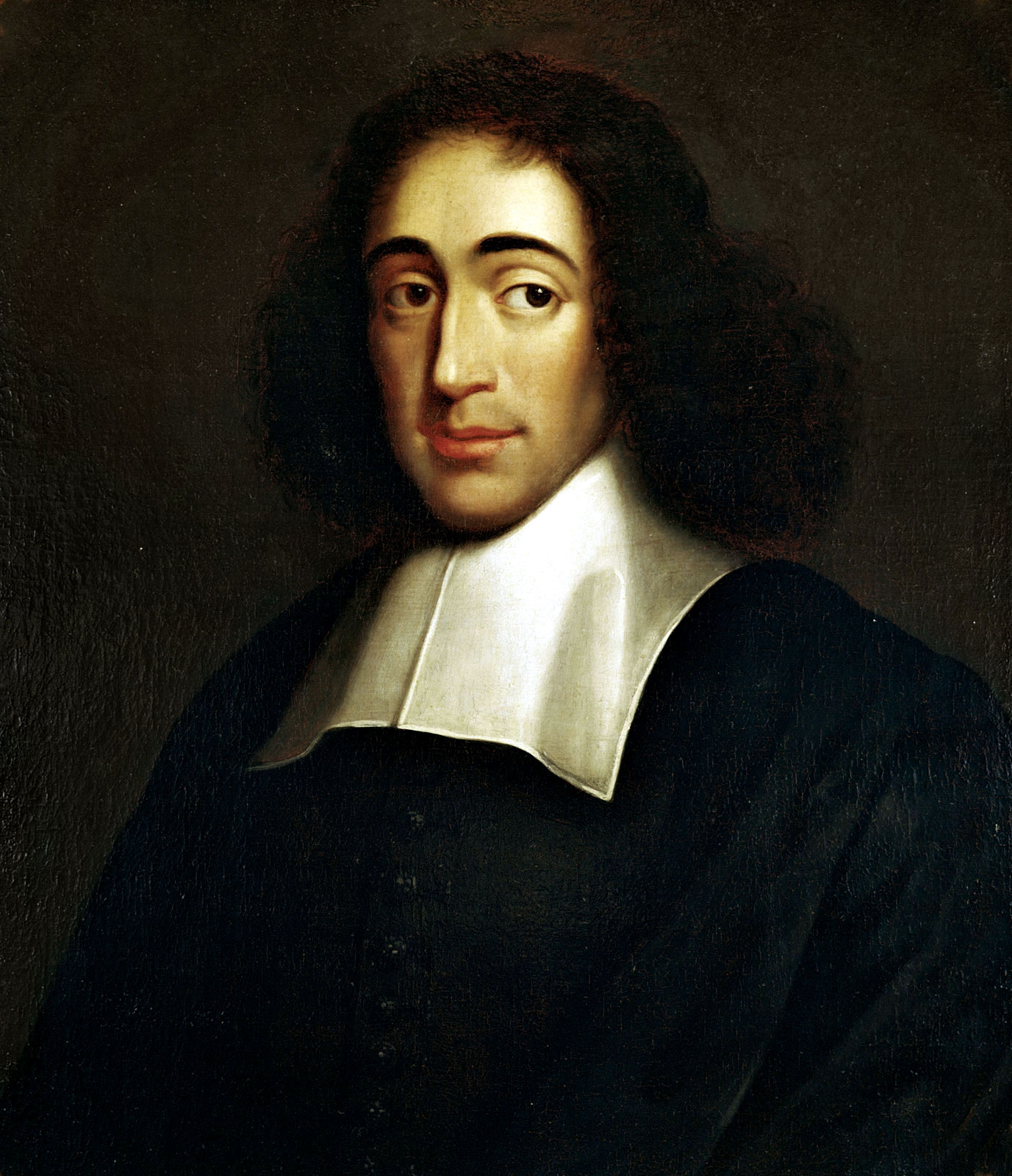
Benedict de Spinoza, on the philosopher's mission


To love that which is eternal, infinite, and good.


"After experience had taught me that all things which frequently take place in ordinary life are vain and futile, and when I saw that all the things I feared, and which feared me, had nothing good or bad in them save in so far as the mind was affected by them; I determined at last to inquire whether there was anything which might be truly good, and able to communicate its goodness, and by which the mind might be affected to the exclusion of all other things; I determined, I say, to inquire whether I might discover and attain the faculty of enjoying throughout eternity continual supreme happiness.... I could see the many advantages acquired from honor and riches, and that I should be debarred from acquiring these things if I wished seriously to investigate a new matter.... But the more one possesses of either of them, the more the pleasure is increased, and the more one is in consequence encouraged to increase them; whereas if at any time our hope is frustrated, there arises in us the deepest pain. Fame has also this great drawback, that if we pursue it we must direct our lives in such a way as to please the fancy of men, avoiding what they dislike and seeking what pleases them.... But the love towards a thing eternal and infinite alone feeds the mind with a pleasure secure from all pain.... The greatest good is the knowledge of the union which the mind has with the whole of nature.... The more the mind knows, the better it understands its forces and the order of nature; the more it understands its forces or strength, the better it will be able to direct itself and lay down the rules for itself; the more it understands the order of nature, the more easily it will be able to liberate itself from useless things; this is the whole method."

—Benedict de Spinoza, Treatise on the Emendation of the Intellect


Tuesday, March 24, 2015

Thomas Szasz, Epicurean psychiatrist?


Mad in America
"The opposition of these two approaches [i.e., shamanism v. medicalism] is well known, and figures in every history of psychiatry. What is less familiar today is that in 4th-century BC Greece, yet another view was on offer—the Epicurean model, which attributed mental abnormality, as inferred from behavioral deviance or self-report, to spiritual anguish. The Epicurean model held that man’s universal fear of death was responsible for his mental anguish, which caused and resulted from his poor choices and failure to understand the relationship between his appetites and his responsibility. The sacred symbol of the Epicurean view is its emblematic treatment, talk therapy or exercise, both mental and physical.
The competition among three different models of mental anguish—the shamanic, the medical, and the Epicurean—is hard to map onto today’s context. In part this is because the Epicurean model runs counter to modern scientific thinking. It interpreted the spirit or mind (psyche, soul), not as something immortal and God-given, but as a purely mortal and material product of natural evolution; so it may seem counterintuitive. Since most people today, and especially non-Christians, believe either that the soul does not really exist, or that the mind is just a function of the brain, they have a hard time understanding this approach. For an atheist to say we have a spirit, and to refer to "spiritual well being" (as Szasz does), may strike you as funny. Most unreligious people today would deny that human beings have a spirit. For them, humans are organic compounds of atoms, molecules, electrochemical processes, and no more. There is no room in this picture for a spirit, a word that smacks of religion, superstition, or supernaturalism. Furthermore, today psychoanalysis (talk therapy) and pharmacophysical treatment (lobotomy, electroshock, drugs) are both subsumed under the name psychiatry; whereas in antiquity, the two were in direct competition. The medical model was the province of the Hippocratic healers, or doctors. The Epicurean model was the province of the philosophers and their students. Each group explained distress differently. The philosophers, like psychoanalysts, thought the patient’s psyche was disturbed; whereas the psychiatrists, like the Hippocratics, thought the brain's chemistry (or humors) were out of balance. (In antiquity, the shamanic model was only believed in by the lower classes and because it is obsolete today, it does not interest us here.)
It is the Epicurean model, I suggest, that Szasz himself hit upon and developed independently—though he was apparently unaware that he was reactivating a view that was not only ancient, but that had once been massively influential on civilized man, and for seven centuries."
The entire paper is well worth reading.

Thursday, December 11, 2014

Even science involves a leap of faith


Jack Miles, in The Atlantic:

"Science is immortal, but you are not. History is immortal: Earth could be vaporized, and on some unimaginably distant planet on some unimaginably remote future date, another civilization’s historians could still choose to use the terrestrial year as a unit of time measurement. But where does that leave you? You have a life to live here and now. “Tell me,” the poet Mary Oliver asks, “what is it you plan to do with your one wild and precious life?” We never truly know how to reply to that challenge, do we, since more knowledge—the knowledge we do not have—could always justify holding current plans in abeyance just a little longer. But when life refuses to wait any longer and the great game begins whether you have suited up or not, then a demand arises that religion—or some expedient no more fully rational than religion—must meet. You’re going to go with something. Whatever it is, however rigorous it may claim to be as either science or religion, you’re going to know that you have no perfect warrant for it. Yet, whatever you call it, you’re going to go with it anyway, aren’t you?"


Tuesday, October 28, 2014

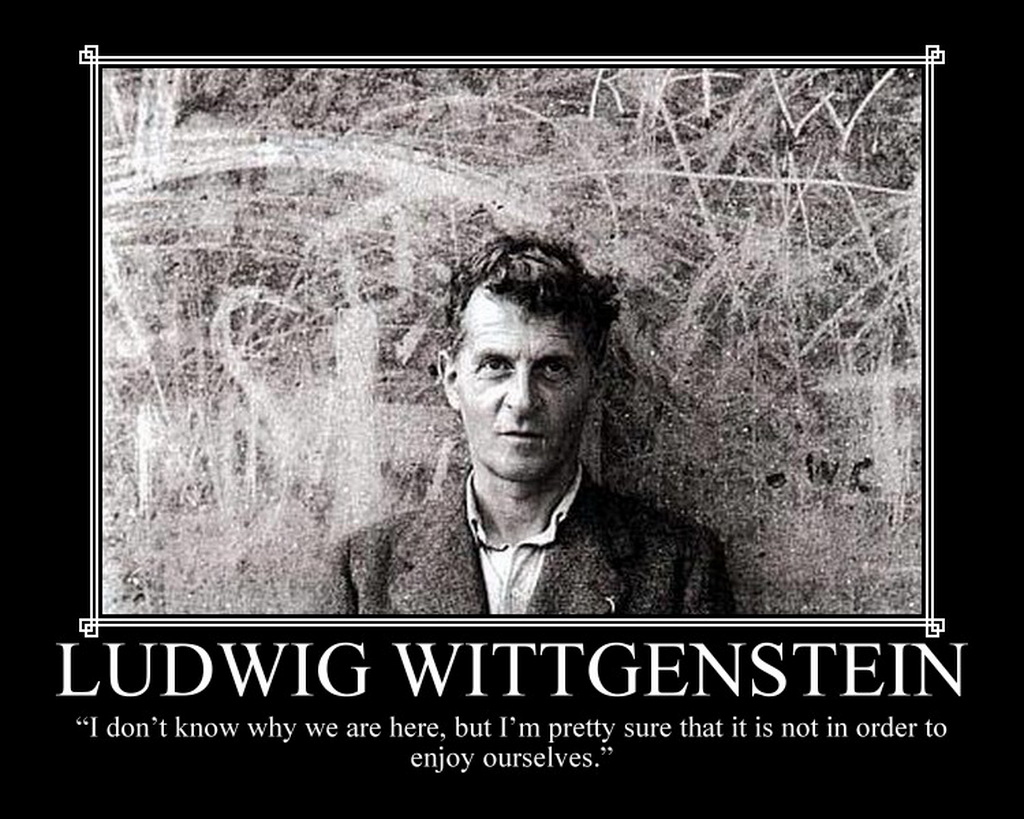
Wittgenstein's Forgotten Lesson -- Ray Monk (1999)


Prospect Magazine
"One of the crucial differences between the method of science and the non-theoretical understanding that is exemplified in music, art, philosophy and ordinary life, is that science aims at a level of generality which necessarily eludes these other forms of understanding. This is why the understanding of people can never be a science. To understand a person is to be able to tell, for example, whether he means what he says or not, whether his expressions of feeling are genuine or feigned. And how does one acquire this sort of understanding? Wittgenstein raises this question at the end of Philosophical Investigations. “Is there,” he asks, “such a thing as ‘expert judgment’ about the genuineness of expressions of feeling?” Yes, he answers, there is.
But the evidence upon which such expert judgments about people are based is “imponderable,” resistant to the general formulation characteristic of science. “Imponderable evidence,” Wittgenstein writes, “includes subtleties of glance, of gesture, of tone. I may recognise a genuine loving look, distinguish it from a pretended one… But I may be quite incapable of describing the difference… If I were a very talented painter I might conceivably represent the genuine and simulated glance in pictures.”
But the fact that we are dealing with imponderables should not mislead us into believing that all claims to understand people are spurious. When Wittgenstein was once discussing his favourite novel, The Brothers Karamazov, with Maurice Drury, Drury said that he found the character of Father Zossima impressive. Of Zossima, Dostoevsky writes: “It was said that… he had absorbed so many secrets, sorrows, and avowals into his soul that in the end he had acquired so fine a perception that he could tell at the first glance from the face of a stranger what he had come for, what he wanted and what kind of torment racked his conscience.” “Yes,” said Wittgenstein, “there really have been people like that, who could see directly into the souls of other people and advise them.”
“An inner process stands in need of outward criteria,” runs one of the most often quoted aphorisms of Philosophical Investigations. It is less often realised what emphasis Wittgenstein placed on the need for sensitive perception of those “outward criteria” in all their imponderability. And where does one find such acute sensitivity? Not, typically, in the works of psychologists, but in those of the great artists, musicians and novelists. “People nowadays,” Wittgenstein writes in Culture and Value, “think that scientists exist to instruct them, poets, musicians, etc. to give them pleasure. The idea that these have something to teach them-that does not occur to them.”"


Thursday, July 17, 2014

Michael Oakeshott, and academia as it once was

 
"[Michael Oakeshott] would have found the industrial-style intellectual labour that has entrenched itself in much of academic life over the past twenty-odd years impossible to take seriously. He wrote for himself and anyone else who might be interested; it is unlikely that anyone working in a university today could find the freedom or leisure that are needed to produce a volume such as this. Writing in 1967, Oakeshott laments, 'I have wasted a lot of time living.' Perhaps so, but as this absorbing selection demonstrates, he still managed to fit in a great deal of thinking."


Monday, July 7, 2014

Over 40% of us would rather hurt ourselves than think


Science

Abstract
 
In 11 studies, we found that participants typically did not enjoy spending 6 to 15 minutes in

a room by themselves with nothing to do but think, that they enjoyed doing mundane

external activities much more, and that many preferred to administer electric shocks to

themselves instead of being left alone with their thoughts. Most people seem to prefer to

be doing something rather than nothing, even if that something is negative.


Many participants elected to receive negative

stimulation over no stimulation

especially men: 67% of men (12 of 18) gave themselves

at least one shock during the thinking period

[range = 0 to 4 shocks, mean (M) = 1.47,

SD =1.46, not including one outlier who administered

190 shocks to himself], compared to 25%

of women (6 of 24; range = 0 to 9 shocks,

M = 1.00, SD = 2.32). Note that these results only

include participants who had reported that they

would pay to avoid being shocked again.
 

The gender difference is probably due to the

tendency for men to be higher in sensation-seeking.


But what is striking is that simply

being alone with their own thoughts for 15 min

was apparently so aversive that it drove many

participants to self-administer an electric shock

that they had earlier said they would pay to avoid.


Monday, May 12, 2014

"Why Science Does Not Disprove God" (Book Review)


A useful reminder that there isn't any evidence for "multiverses," minds are nowhere near ready for "uploading," and that no biologist has ever been able to create life from non-life.


WSJ
In the 1850s, Darwin's theory of evolution removed the need for a god to have designed all living things. Then a century of brilliant scientists cracked the mysteries of physics, cured feared diseases and explained inheritance through DNA. Science was on a roll and, to atheists, must have seemed to be on the verge of finishing off religious belief. By the 1950s, life, it was said, was about to be made in a test tube, artificial intelligence in computers was just around the corner, and the mind would be fully accounted for by behaviorist psychology and brain chemistry. It must have seemed that the Sea of Faith was enduring, as Matthew Arnold feared, its "melancholy, long, withdrawing roar."
Then the going got tough for the atheists. While the amount of successful science done increased enormously, the spectacular breakthroughs of the previous century dried up. That was especially so in the areas that were supposed to make the world uninhabitable for religious belief or for any non-materialist view of humanity. The process of making life from nonlife, which was believed to have happened by chance near the beginning of the earth's history, could not be replicated in the laboratory even in the most favorable conditions. Artificial intelligence has remained rudimentary; even its signature success— victory over the world chess champion in 1997—was mostly a demonstration of the uniqueness of human intelligence. The computer Deep Blue played chess by searching hundreds of millions of moves a second, assisted by rules cloned from human experts. It could not think about the game like a human. The programmers' inability to make computers imitate understanding, that most human of mental activities, exploded our naïve and simplistic views of the mind.
To make matters worse, physics unexpectedly created trouble. (Physics? Et tu, Brute?) Physics is the science of matter itself, the foundational science for all the other natural sciences. In the 1960s and 1970s, it gradually became clear that the universe was very "fine-tuned" for the existence of life. If the basic physical constants, like the strength of gravity, had been very slightly different, the universe would be unable to support life. The fine-tuning is very, very fine: for the strength of gravity, perhaps one part in 10 to the power of 40. In the physicist Freeman Dyson's words, "it almost seems as if the Universe must in some sense have known that we were coming."
For those who prefer not to have a Divine Engineer tuning the dials, the alternatives are unpalatable. The most natural are multiverse theories, according to which all possible universes exist simultaneously and we simply find ourselves in the one that makes our existence possible. This is not out of the question, but there is no actual evidence for it. It is just an "atheism of the gaps," calling imaginary entities from the vasty deep to plug a theoretical hole. The postulation probably involves gods, too—maybe not the omnipotent creator of the Abrahamic religions, but surely some unlikely combination of quantum fluctuations could produce Zeus and his colorful activities? Zeus is just a very big superman (physically, of course, not morally) up on Olympus and thus something that physics could manage to account for. The other possibility is to hope that there is some unknown mathematical reason why the constants are locked in as they are—again, a possibility, but one for which there is currently no other evidence.
...
The book will be quite satisfactory as a generally reliable introduction for readers who know nothing about the subject. But those who are prepared to try something more nuanced would be wise to consider three recent books by serious philosophers: "There Is a God" by the former noted atheist Antony Flew; Ronald Dworkin's "Religion Without God"; and Thomas Nagel's "Mind and Cosmos." They reach similar conclusions to Mr. Aczel's, but the authors are all top-flight (yet generally accessible) philosophers. None of their arguments make revealed religion any more likely. But the days of triumphalist scientism are over.