Showing posts with label psychiatry. Show all posts

Wednesday, March 25, 2015

Review of Jeffrey Lieberman's Shrinks: The Untold Story of Psychiatry


Excerpt from a great review by Gary Greenburg.

Book Forum
"I may be critical of psychiatry, but as a clinician, I would be thrilled if the portrait Lieberman paints of the mental health field bore a closer resemblance to reality. If a scientific medicine of the brain were truly available, I’d be glad to avail myself of it. At the very least, I’d be relieved not to worry that every time I sent a patient to a psychiatrist, she might return with a fistful of prescriptions, little idea of how the drugs work (for no one really knows) or what side effects she may suffer, and no guarantee that she will get better. Lieberman’s apologetics suffer from his cheerleading, from a tendency to gloss over history that would perhaps suggest a less sanguine conclusion than his.
...
But it’s not just the distant past that Lieberman leaves unrecounted. He minimizes or entirely overlooks such unsavory recent chapters as the widespread diagnosis, against the criteria of the DSM, of bipolar disorder in the very young and their subsequent treatment with powerful (and untested in children) antipsychotic drugs—an episode that occasioned Senate hearings and front-page exposés. He never acknowledges that the “serotonin imbalance” that antidepressants supposedly rectify does not exist—or if it does, it has yet to be discovered—and his lock-and-key image belies the much less certain clinical reality, in which antidepressants are routinely prescribed for anxiety disorders, antipsychotics for mood disorders, and anti-anxiety drugs for a wide range of complaints—and all on a trial-and-error basis. He fails to mention that no new psychiatric medications have been discovered in the past quarter century, or that none of the newer ones have proved more effective than the drugs discovered in the 1950s (although some of them do have fewer side effects). And he vastly overestimates the current state of neuroscience, which is only beginning to unravel the mysteries of how the billions of neurons and trillions of connections among them turn into consciousness."


Tuesday, March 24, 2015

Thomas Szasz, Epicurean psychiatrist?


Mad in America
"The opposition of these two approaches [i.e., shamanism v. medicalism] is well known, and figures in every history of psychiatry. What is less familiar today is that in 4th-century BC Greece, yet another view was on offer—the Epicurean model, which attributed mental abnormality, as inferred from behavioral deviance or self-report, to spiritual anguish. The Epicurean model held that man’s universal fear of death was responsible for his mental anguish, which caused and resulted from his poor choices and failure to understand the relationship between his appetites and his responsibility. The sacred symbol of the Epicurean view is its emblematic treatment, talk therapy or exercise, both mental and physical.
The competition among three different models of mental anguish—the shamanic, the medical, and the Epicurean—is hard to map onto today’s context. In part this is because the Epicurean model runs counter to modern scientific thinking. It interpreted the spirit or mind (psyche, soul), not as something immortal and God-given, but as a purely mortal and material product of natural evolution; so it may seem counterintuitive. Since most people today, and especially non-Christians, believe either that the soul does not really exist, or that the mind is just a function of the brain, they have a hard time understanding this approach. For an atheist to say we have a spirit, and to refer to "spiritual well being" (as Szasz does), may strike you as funny. Most unreligious people today would deny that human beings have a spirit. For them, humans are organic compounds of atoms, molecules, electrochemical processes, and no more. There is no room in this picture for a spirit, a word that smacks of religion, superstition, or supernaturalism. Furthermore, today psychoanalysis (talk therapy) and pharmacophysical treatment (lobotomy, electroshock, drugs) are both subsumed under the name psychiatry; whereas in antiquity, the two were in direct competition. The medical model was the province of the Hippocratic healers, or doctors. The Epicurean model was the province of the philosophers and their students. Each group explained distress differently. The philosophers, like psychoanalysts, thought the patient’s psyche was disturbed; whereas the psychiatrists, like the Hippocratics, thought the brain's chemistry (or humors) were out of balance. (In antiquity, the shamanic model was only believed in by the lower classes and because it is obsolete today, it does not interest us here.)
It is the Epicurean model, I suggest, that Szasz himself hit upon and developed independently—though he was apparently unaware that he was reactivating a view that was not only ancient, but that had once been massively influential on civilized man, and for seven centuries."
The entire paper is well worth reading.

Thursday, January 22, 2015

Psy-feld class brings psychiatry training to a new low

 
NJ.com
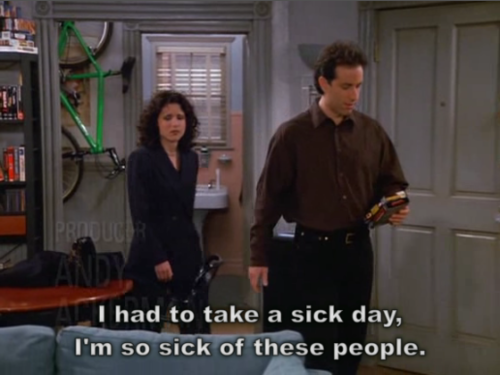
"It’s 9 a.m. on a Tuesday morning at Robert Wood Johnson University Hospital and 10 medical students sit around a conference table covered by coffee cups and clipboards. Preparing to start their morning rounds, the students chat about what they watched on television the night before.
“Jerry’s girlfriend doesn’t like George,” third-year student Marlene Wang says, referring to the iconic 1990s sitcom "Seinfeld." “And he just couldn’t live with the idea of this person not liking him.”
This isn’t a discussion about nothing. More than 15 years after the final episode, "Seinfeld" is the basis for “Psy-feld,” a teaching tool designed to help medical students identify and discuss psychiatric disorders."

Personally, I find this horrifying. This is training in psychopathology, I suppose, but for bright high school juniors -- not psychiatry residents. I wonder if part of the reason for this approach is that most of the psychiatry residents are foreign born? Watching American sit-coms might help them learn some idioms. But when they practice, all they are going to do is diagnose you as "bipolar," give you (oddly) an antidepressant, and when that doesn't work, add an antipsychotic. If they like you, they'll give you Xanax, too. Oh, and ADHD meds for the kiddies.


Monday, September 9, 2013

Eric Kandel: Psychotherapy is a biological treatment

New York Times

"These results show us four very important things about the biology of mental disorders. First, the neural circuits disturbed by psychiatric disorders are likely to be very complex.
Second, we can identify specific, measurable markers of a mental disorder, and those biomarkers can predict the outcome of two different treatments: psychotherapy and medication.
Third, psychotherapy is a biological treatment, a brain therapy. It produces lasting, detectable physical changes in our brain, much as learning does.
And fourth, the effects of psychotherapy can be studied empirically. Aaron Beck, who pioneered the use of cognitive behavioral therapy, long insisted that psychotherapy has an empirical basis, that it is a science. Other forms of psychotherapy have been slower to move in this direction, in part because a number of psychotherapists believed that human behavior is too difficult to study in scientific terms."


This is a nice review of the psychotherapy-neuroscience nexus, which concludes that psychotherapy cannot be reduced to an "applied neuroscience."


Friday, September 6, 2013

The most famous psychiatrist in America


FORT HOOD, Texas (Reuters) - A military jury on Wednesday sentenced a U.S. Army psychiatrist to death for murdering 13 people in 2009 at Fort Hood, Texas, where he gunned down unarmed soldiers in what he later called retaliation for U.S. wars in the Muslim world.

Major Nidal Hasan shouted "Allahu Akbar" ("God is greatest" in Arabic) during the attack and later said he wanted to be a martyr. Now he faces death by lethal injection, pending an automatic appeal, for the rampage that also wounded 31 people.


At 1:30 p.m. on Nov. 5, 2009, a man in military uniform enters one of the buildings making up the Soldier Readiness Processing Center, where hundreds of soldiers headed for Afghanistan are lined up for medical screening. Shouting "God is great" in Arabic, the man opens fire with what is believed to be an FN Herstal tactical pistol, a weapon popular with SWAT teams. Thirteen people are killed, including a woman who was three months pregnant. Walking between buildings, the assailant runs into civilian police officer Kimberley Munley and shoots her several times. As the gunman reloads, he is shot by her colleague Sergeant Mark Todd, who then cuffs him. The Texas base is in confusion for hours.
The [no longer] alleged gunman is identified as Major Nidal Malik Hasan, 39, an Army psychiatrist. Beginning the day before the massacre, Hasan allegedly gave away all his possessions, including a desk lamp, air mattress, frozen vegetables and copies of the Koran. He told his imam that he was planning to visit his parents before deploying to Afghanistan. His mother and father, however, had been dead for nearly a decade.

New York Times

Major Hasan was born in Arlington, Va., on Sept. 8, 1970. His parents, Palestinians who had immigrated from the West Bank in the 1960s, moved the family to Roanoke when he was a youth. The lower cost of living offered a chance to open businesses, relatives said: first a somewhat seedy bar in the old farmer’s market downtown; later a more upscale Middle Eastern restaurant and a convenience store.
Major Hasan was the oldest of three boys, all of whom helped in the family businesses before going off to college and professional schools. Major Hasan graduated with honors from Virginia Tech in biochemistry in 1995. ...
Against the wishes of his parents, relatives said, Major Hasan enlisted in the Army after graduating from college and entered an officer basic training program at Fort Sam Houston, Tex. He was commissioned in 1997 and went to medical school at the Uniformed Services University of Health Sciences in Bethesda, Md., a selective and tuition-free program.
After graduating in 2003, he did his internship and residency in psychiatry at Walter Reed Army Medical Center and then completed a two-year fellowship in preventive and disaster psychiatry, earning a master’s degree in public health.
An uncle who lives in Ramallah said Major Hasan chose psychiatry over surgery after fainting while observing childbirth during his medical training.  


He was promoted from captain to major in May 2009 and assigned to Fort Hood that July, and his officer evaluation reports referred to him as a star officer.
But the officer who assigned Major Hasan to Fort Hood told an Army official there that “you’re getting our worst,” according to a 2011 report prepared by the offices of Senator Joseph I. Lieberman, independent of Connecticut, and Senator Susan Collins, Republican of Maine. The report found that Army officers who knew of Major Hasan’s problematic behavior gave him evaluations that misstated his performance and ignored complaints about his radical Islamic views.
One of the allegations in a lawsuit filed against federal and Pentagon officials by victims and survivors of the attack has been that the shooting, which left 13 people dead and more than 30 wounded, was preventable.
A Pentagon review of the shooting released in 2010 recommended several Army officers be referred for possible punishment for not properly supervising Major Hasan and found that the Defense Department was focused on fighting external threats rather than radicalization within its ranks.


Thursday, September 5, 2013

The "devastatingly effective myth" of psychopharmacology

The New Yorker

[P]sychopharmacology...is...deeply indebted to...a remarkable series of accidental discoveries made in the fifteen or so years following the end of the Second World War.
In 1949, John Cade published an article in the Medical Journal of Australia describing his discovery that lithium sedated people who experienced mania. Cade had been testing his theory that manic people were suffering from an excess of uric acid by injecting patients’ urine into guinea pigs, who subsequently died. When Cade diluted the uric acid by adding lithium, the guinea pigs fared better; when he injected them with lithium alone, they became sedated. He noticed the same effect when he tested lithium on himself, and then on his patients. Nearly twenty years after he first recommended lithium to treat manic depression, it became the standard treatment for the disorder.
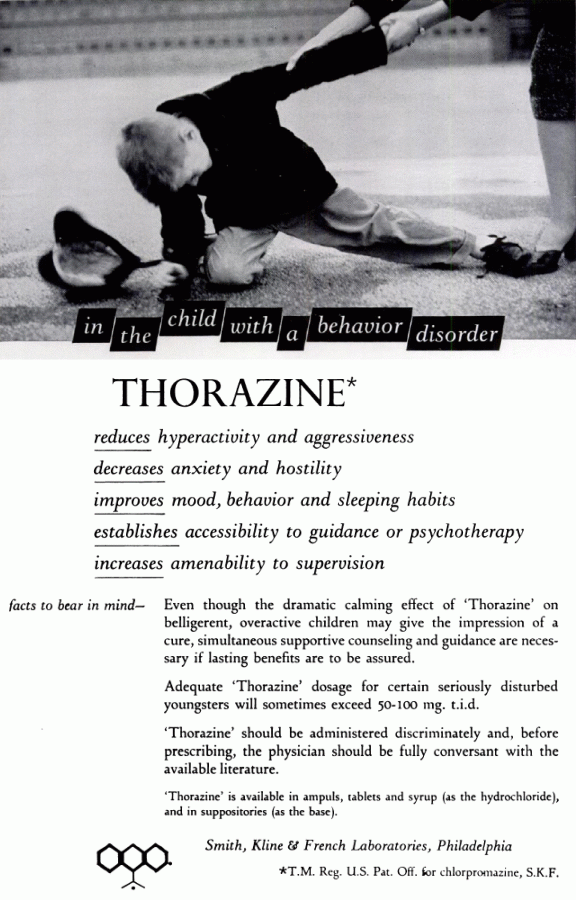
In the nineteen-forties and fifties, schizophrenic patients in some asylums were treated with cold-induced “hibernation”—a state from which they often emerged lucid and calm. In one French hospital, the protocol also called for chlorpromazine, a new drug thought to increase the hibernation effect. One day, some nurses ran out of ice and administered the drug on its own. When it calmed the patients, chlorpromazine, later named Thorazine, was recognized in 1952 as the first drug treatment for schizophrenia—a development that encouraged doctors to believe that they could use drugs to manage patients outside the asylum, and thus shutter their institutions.


In 1956, the Swiss firm Geigy wanted in on the antipsychotics market, and it asked a researcher and asylum doctor, Roland Kuhn, to test out a drug that, like Thorazine, was an antihistamine—and thus was expected to have a sedating effect. The results were not what Kuhn desired: when the schizophrenic patients took the drug, imipramine, they became more agitated, and one of them, according to a member of the research team, “rode, in his nightshirt, to a nearby village, singing lustily.” He added, “This was not really a very good PR exercise for the hospital.” But it was the inspiration for Kuhn and his team to reason that “if the flat mood of schizophrenia could be lifted by the drug, then could not a depressed mood be elevated also?” Under the brand name Tofranil, imipramine went on to become the first antidepressant—and one of the first blockbuster psychiatric drugs.
American researchers were also interested in antihistamines. In 1957, Leo Sternbach, a chemist for Hoffmann-La Roche who had spent his career researching them, was about to throw away the last of a series of compounds he had been testing that had proven to be pharmacologically inert. But in the interest of completeness, he was convinced to test the last sample. “We thought the expected negative pharmacological results would cap our work on this series of compounds,” one of his colleagues later recounted. But the drug turned out to have muscle-relaxing and sedative properties. Instead of becoming the last in a list of failures, it became the first in a series of spectacular successes—the benzodiazepenes, of which Sternbach’s Librium and Valium were the flagships.


By 1960, the major classes of psychiatric drugs—among them, mood stabilizers, antipsychotics, antidepressants, and anti-anxiety drugs, known as anxiolytics—had been discovered and were on their way to becoming a seventy-billion-dollar market. Having been discovered by accident, however, they lacked one important element: a theory that accounted for why they worked (or, in many cases, did not).
...
Despite their continued failure to understand how psychiatric drugs work, doctors continue to tell patients that their troubles are the result of chemical imbalances in their brains. As Frank Ayd pointed out, this explanation helps reassure patients even as it encourages them to take their medicine, and it fits in perfectly with our expectation that doctors will seek out and destroy the chemical villains responsible for all of our suffering, both physical and mental. The theory may not work as science, but it is a devastatingly effective myth.
Whether or not truthiness, as one might call it, is good medicine remains to be seen. No one knows how important placebo effects are to successful treatment, or how exactly to implement them, a topic Michael Specter wrote about in the magazine in 2011. But the dry pipeline of new drugs bemoaned by Friedman is an indication that the drug industry has begun to lose faith in the myth it did so much to create. As Steven Hyman, the former head of the National Institute of Mental Health, wrote last year, the notion that “disease mechanisms could … be inferred from drug action” has succeeded mostly in “capturing the imagination of researchers” and has become “something of a scientific curse.” Bedazzled by the prospect of unraveling the mysteries of psychic suffering, researchers have spent recent decades on a fool’s errand—chasing down chemical imbalances that don’t exist. And the result, as Friedman put it, is that “it is hard to think of a single truly novel psychotropic drug that has emerged in the last thirty years.”
Despite the BRAIN initiative recently announced by the Obama Administration, and the N.I.M.H.’s renewed efforts to stimulate research on the neurocircuitry of mental disorder, there is nothing on the horizon with which to replace the old story. Without a new explanatory framework, drug-company scientists don’t even know where to begin, so it makes no sense for the industry to stay in the psychiatric-drug business. And if loyalists like Hyman and Friedman continue to say out loud what they have been saying to each other for many years—that, as Friedman told Times readers, “just because an S.S.R.I. antidepressant increases serotonin in the brain and improves mood, that does not mean that serotonin deficiency is the cause of the disease”—then consumers might also lose faith in the myth of the chemical imbalance.


Tuesday, July 9, 2013

Nicholas Cummings -- Time for Psychotherapy to Take on Pharmacotherapy

An impassioned plea from former APA President Nicholas Cummings. This one line really grabbed me: "How long has it been since you have seen a patient who came to you who had not already been medicated by the primary care physician or a psychiatrist?" This is such a striking observation that you don't realize it at first because it is so "normal." That is, it is normal for a primary care physician to begin "treating" a patient for anxiety or depression even before a thorough psychological assessment has been made by a mental health specialist. They write the prescription and then they refer for psychotherapy (if they refer at all, which they rarely do).


"We are seeing in the second decade of the 21st Century two forces converging that create both an imperative and a golden opportunity for psychology. The first is the continued steady decline of psychotherapy which has been largely replaced by psychotropic medication. How long has it been since you have seen a patient who came to you who had not already been medicated by the primary care physician or a psychiatrist? Antidepressants are ubiquitous, prescribed not only for the Monday morning blues or any degree of sadness, but also for such off-label conditions as erectile dysfunction, smoking cessation, obesity, obsessive compulsion, and even bereavement, with the latter practice unfortunately interfering with and severely prolonging nature’s healing process. It did not used to be that way prior to the medicalization of mental health. Rather, the patient first saw a psychologist, psychotherapy was the first line intervention, and in those instances when the psychologist determined medication was necessary, it was arranged through a cooperating psychiatrist. But the psychologist’s evaluation always came first. 


Psychotherapy was not only effective, numerous researches over decades repeatedly revealed it saved medical/surgical dollars. There was a high regard for our services among the general public, which was heralded in the media, movies and government sponsored programs such as the community mental health centers. It was usual for highly sought psychotherapists to have long waiting lists of those who clamored but patiently waited for their services, not only because of need, but also for self-improvement. Psychiatrists medicalized because they wanted tobe “real doctors.” They abandoned psychotherapy, and became essentially a prescribing and hospitalizing profession, thus making psychology the booming, preeminent psychotherapy profession. The American Psychiatric Association cleverly responded by joining Big Pharma with its grants, subsidies, and other goodies, and then captured the National Institute of Mental Health (NIMH) with a sweeping “changing of the guard” at the highest levels. The DSM threw out all psychopathology to fit into the new theories of serotonin and dopamine receptor imbalances in the brain. It promised to cure mental illness through a rapidly evolving series of psychotropic meds. On the basis that medication would thus solve the problem, our state hospitals were deinstitutionalized by releasing hundreds of thousands of schizophrenics with nowhere to go and only a supply of medication. Overnight the street and the prison became our de facto mental hospitals and remain so to this day in spite of new generations of highly touted antipsychotics.


The second force is the rapidly developing backlash among the public resulting from mounting and often serious side-effects, the over-prescribing of medication for minor conditions and especially for children, revelations of tampering with clinical trials by throwing out studies with negative or neutral findings, and, worst of all, psychiatrists conducting the research and those promoting various drugs have been subsidized or even directly hired by the pharmaceutical companies. Additionally, the cherished “brain chemical imbalance” theories are being called into question by numerous studies and are chronicled in two best-selling books published in 2010. The DSMs have successively abandoned any validity to actual brain diseases, becoming arbitrary collections of symptoms that are grouped into syndromes given clinical-sounding names, and with every syndrome needing a medication or class of medications. Psychotherapy is disdained as ineffective and even irrelevant “talk therapy.”


But now Big Pharma has never had a lower public image, giving us an opportunity made in heaven for us to make a comeback. This is the time to mount an extensive campaign to educate the American public on the effectiveness of psychotherapy and to restore it as the first line intervention in behavioral health. Such a campaign would not only be directed through the media, but it would involve the most recent communication innovations such as YouTube. Can we afford to do this is not the question. Rather, it is, “Can we afford NOT to do this?” If we miss this golden opportunity psychotherapy will continue to decline and psychology as a direct service profession will become a relic that someday economic paleontology can unearth and dissect, seeking to answer why the most admired profession of the 20th Century died in the 21st."


References

Carlat, D.J. (2010). Unhinged: The trouble with psychiatry - A doctor's revelations about a

profession in crisis. New York: Free Press.

Whitaker, K. (2010). Anatomy of an epidemic. New York: Crown.

(Reprinted by the author from
The National Psychologist, 20(1), p. 8, January/February 2011.)


Friday, May 31, 2013

Nothing is funny to a psychiatrist...


...or to a clinical psychologist. This recent New Yorker cartoon makes a strong point about the potentially infantilizing effects of being medicated. But by suggesting that the goal of combined treatment (psychotherapy + medication) is being "happy," the cartoon is discordant with Freud's contention that the purpose of psychoanalysis is to transform uncommon misery into "common unhappiness." If the patient is "happy," why are they still in treatment? I like to think that a psychoanalyst would be more likely to see the patient's "happiness" as a medication effect (e.g., feeling more energized) and would thus want to titrate her off her meds and then get down to her core issues.

The cartoon made me wonder how many psychoanalysts also prescribe medication to their patients. It turns out that up to 90% of psychoanalysts also prescribe medication and that medication is used in about 30% of supervised training cases. From Gabbard (2005):

"The patient must be viewed simultaneously as a disturbed person and as a diseased central nervous system. The former view requires an empathic, subjective approach, whereas the latter demands an objective, medical model approach. The clinician must be able to shift between these two modes gracefully while remaining attuned to the impact of the shift on the patient" (p. 151).
Gabbard notes that patients sometimes feel like their doctors are "giving up on them" when they recommend medication. He also notes that clinicians and patients often disagree about the relative contributions of psychotherapy and medication. In my experience, patients are often too eager to attribute positive treatment gains to pharmacological effects. The psychological effects of medication are especially clear when patients report significant improvement within a day or two after starting SSRIs, or after taking homeopathic doses of their prescribed medications, or when they say that they "only take my Wellbutrin when I'm having a bad day."

Some quibbles: The doctor's chair is too far forward; his shoes are in the patient's peripheral vision and he should be completely out of view. (That way she will feel more free to say whatever comes to mind -- free associate -- without concern over his reactions.) There shouldn't be a painting in the patient's line of sight, either, because it will influence the free association. I do like how the facial tissues are just out of reach -- this isn't supportive therapy, bucko. And nice touch with the antimacassar.


From the excellent website of the American Psychoanalytic Association:

In psychoanalysis, the patient typically comes four times a week [!], lies on a couch, and attempts to communicate as openly and freely as possible, saying whatever comes to mind. These conditions create the analytic setting, which enables you to become more aware of aspects of your internal experience previously hidden. As you speak, hints of the roots of current difficulties that have been out of your awareness gradually begin to appear – in certain repetitive patterns of behavior, thought and emotion, in the subjects which you find hard to talk about, in the ways you relate to the analyst. The analyst helps to identify these patterns, and together you and the analyst refine your understanding of the patterns that limit you or cause you pain, and help you elaborate new and more productive ways of feeling, thinking and behaving. During the years [!] that an analysis takes place, you wrestle with these insights, going over them again and again with the analyst and experiencing them in your daily life, fantasies, and dreams. You and the analyst join in efforts not only to modify crippling life patterns and remove incapacitating symptoms, but also to expand your freedom to enjoy intimate relationships and professional and personal pursuits. Gradually, you will change in deep and meaningful ways; you may notice changes in your behavior, relationships and sense of self.
 

Tuesday, May 14, 2013

Lost in Medication


This piece by psychiatry resident Sarah Mourra appeared in The Atlantic on May 10, 2013.

Begin Excerpt

"In many places psychiatry has become a biological enterprise, with some psychiatrists even introducing themselves as "psychopharmacologists." In no other specialty does a physician define themselves by the medication that they use. As one of my psychiatry professors once commented, "I have never met an oncologist who says "I'm an onco-pharmacologist." Increasingly, we are convinced that medications are what make patients better -- and that if only they would stay on them, if only they would take them as we have prescribed them, if only they were on the right one or the right dose -- they would get better.
In reality the process of getting better is much more complicated. Medications can play a large role, but other factors are enormously important -- environment, sense of purpose and meaning, the person's perception of their illness, and their relationship with the people who treat them. Studies have shown that patients taking placebo who have a good relationship with their psychiatrist have better outcomes than patients taking the active drug who do not have that strong personal connection. In the outpatient setting, a well-trained psychiatrist will follow what's called the biopsychosocial treatment model -- which values the biological, psychological, and social aspects of a person in considering their treatment -- and consider these other parts of the patient's healing process, in addition to medication."

End Excerpt

Let's stop there for a moment. First of all, check out the Results section of the abstract that she linked to (Mckay, Imel, & Wampold, 2006. Psychiatrist effects in the psychopharmacological treatment of depression. Journal of Affective Disorders):

"The proportion of variance in the BDI scores due to medication was 3.4% (p < .05), while the proportion of variance in BDI scores due to psychiatrists was 9.1% (p < .05). The proportion of variance in the HAM-D scores due to medication was 5.9% (p < .05), while the proportion of variance in HAM-D scores due to psychiatrist was 6.7% (p = .053). Therefore, the psychiatrist effects were greater than the treatment effects."
This is data from a randomized double-blind placebo controlled clinical trial of an antidepressant. The psychiatrists were handing out meds to depressed patients, giving placebos to some and active drugs to others. What is stunning to most people is that the degree of your recovery from depression (as measured by BDI and HAM-D scores) was affected more by which psychiatrist you happened to be treated by than whether he or she gave you "real" or "fake" drugs. However, this study (don't you love how we always write, "studies have shown" and then we only cite one study to support our statement?) doesn't say anything about "strong personal connections" between psychiatrists and patients.

For the most part, the patient encounters in this study consisted of the standard "15 minute med checks." Thus there was scant opportunity to build the "strong personal connections" that Dr. Mourra believes were formed, and which she believes explain the findings. But the quality of the "therapeutic alliance" between doctor and patient was not measured in this study. Therefore, it is just as possible that other factors, also not measured by the researchers, played a role, e.g., whether diplomas and certificates were prominently displayed in the doctor's office, whether or not a male psychiatrist wears a tie, the quality of the magazines in the waiting room, etc. You can't just add this study to the ample literature that shows that therapeutic alliance is the most important predictor of psychotherapy outcome (see here, and here, for recent examples).

So, yes, it matters which psychiatrist you happen to see. Some psychiatrists seem to be more effective than others, and their patients tend to do better whether or not the patient is receiving active or placebo medication. But the reason for this is not necessarily because some psychiatrists have formed "strong personal connections" with their patients while others did not. It could be that some of the less effective psychiatrists were non-native English speakers.


"Now do you understand why you stay awake all night, horrified that you are wasting your life?"


Continue Excerpts

"Often under pressure from insurance companies, inpatient psychiatric units experience a tremendous push to medicate patients quickly and discharge them as soon as possible....Often involving numerous rotating caregivers working in shifts, moonlighters, or trainees on one rotation and off to another, patients often complain, "I only saw my doctor for ten minutes!" ....Overpopulated psych units resulting from hospitals trying to keep out of the red often lead to burned out staff members who would rather silence a psychotic, agitated, or complaining patient with medication than sit down and talk to them. ... I remain baffled by the expectation that patients could easily begin the process of recovery from mental illness on most inpatient psychiatric units....These units are designed to keep patients safe and prevent adverse outcomes like a suicide in the hospital or emergency room. However, the therapeutic value of the physical setting is often overlooked as strapped hospital budgets prioritize other needs.

Fed up with the apparent "mill" of psychiatric hospitalization, a process that seemed to lose the person in the cycle of checkboxes and protocols, I wondered out loud to one of my supervisors whether anything like the old asylums existed. Though these institutions had many flaws, it seems as though things have swung too far the other way. The value of fresh air, therapeutic work, and a community of peers seems to have crumbled away in our quest for quicker and faster discharges and a focus on crisis management.

...

This isn't to say that people don't need to be on medication -- but this psychopharmacological myopia is dangerous in that most psychiatrists of my generation pay lip service to the "psychosocial" part of the biopsychosocial treatment model while failing to put it into practice. This is no fault of our own. I come from a generation of psychiatrists who will never see someone come into a hospital, be taken off all medications, and get better. And for many in my generation, if you don't see it, you won't believe it's possible."

End Excerpts

The often repeated quip is that psychiatry follows the "bio-bio-bio" model, rather than the biopsychosocial model. One of my recent patients was told by her psychiatrist (she came to me because of her dissatisfaction with her medication treatment) that her depression was "100% biological" and could only be treated with medication. I do not doubt that he believes this. Most psychiatric residents don't get much training in psychotherapy (compared to clinical psychologists) and fewer psychiatrists spend much time practicing psychotherapy (44% of psychiatric office visits involved psychotherapy in 1997 versus 29% in 2005; source). This response by Ronald Pies to this rather damning New York Times article seems rather weak to me, in that the type of "psychotherapy" provided by psychiatrists he is talking about seems to involve occassionally listening to patients talk about their lives ("supportive psychotherapy") and not the type of  focused, consistent (e.g., 16-24 weekly 50-minute sessions) psychotherapy that I and most of my clinical psychologist colleagues practice.

In the comments section of The Atlantic article, someone called bystander sums the situation up even better than the author of the article:

"It's a weird moment in science. On the one hand you have physicists proclaiming to have answered the ultimate questions posed by the universe, human spirituality, etc. etc. On the other hand, psychiatry, which should be the application of all that insight to the problem of healing people psychologically, is floundering from what looks from the outside like the obvious blunder of thinking that a human being is nothing more than a mass of chemical reactions and physical processes. (That's what the near-exclusive reliance on medication means, right? If you think a human being is a mass of chemicals, then a psychological problem is a chemistry problem, and a chemistry problem calls for a chemical solution.)

Here's hoping the scientific and medical communities get a does of common sense and humility and realize that the spiritual and psychological sides of human being are far from having been explained, let alone explained away, by science, physics and chemistry, and that some old-fashioned common sense, empathy, emotional contact and yes, spiritual insight would go a long way to correcting this weird and weirdly arrogant imbalance."
 
I'll let Abe Maslow have the last word:

I suppose it is tempting, if the only tool you have is a hammer, to treat everything as if it were a nail.
  • The Psychology of Science: A Reconnaissance (1966), Ch. 2, p. 15  
 
 
File:Thor.jpg