Friday, March 7, 2014

Lexicon of Madness -- Munchausen's Syndrome by proxy


Munchausen's Syndrome by proxy: In Factitious Disorder, a person intentionally feigns or produces symptoms so as to gain admission to a hospital, receive attention and treatment from a physician, and more generally "assume the sick role." Factitious Disorder has also been called Munchausen's Syndrome, after a 17th Century German baron and soldier known for telling tall tales. There are no external incentives for his behavior. Patients may assiduously study various physical disorders in order to more effectively mimic their presentation. They might ingest small amount of toxic substances or rub fecal matter into a cut in order to produce an infection that requires medical attention. They might feign severe abdominal pain and, after a series of negative medical tests, agree readily to exploratory abdominal surgery. Their surgeons may observe a herringbone pattern of scarring from past surgeries. A significant percentage of patients with factitious disorder eventually die, from either self-poisoning or complications from unneccessary medical procedures. These "professional patients" can become demanding or even litigious, especially when they feel that their claims are not believed. Many of these patients underwent extensive or repeated medical treatment during childhood, often as the result of physical abuse or neglect. In Factitious Disorder by proxy (or, Munchausen's Syndrome by proxy), a caregiver, almost always the mother, feigns or induces illness in her young child. In that way, she indirectly assumes the "sick role" and garners sympathetic care and attention. While presenting as the "ideal parent," she can also be quite demanding and controlling, insisting on invasive medical tests and risky procedures. Many of these mothers have had nursing training, or claim some kind of medical background. Upon hospitalization, the child often improves, unless the mother continues administering toxins during her visits. Several pediatric hospitals utilize hidden cameras in the rooms of children whose mothers are suspected of Muchausen's Syndrome by proxy.


Thursday, March 6, 2014

Putin's Body Movements and Personality


USA Today

A Pentagon research team is studying the body movements of Russian President Vladimir Putin and other world leaders in order to better predict their actions and guide U.S. policy, Pentagon documents and interviews show.
The "Body Leads" project backed by the Office of Net Assessment (ONA), the think tank reporting to Defense Secretary Chuck Hagel, uses the principles of movement pattern analysis to predict how leaders will act.
...
ONA has backed the work of Brenda Connors, the director of Body Leads and a research fellow at the Naval War College in Newport, R.I., since 1996, records show, and has paid about $300,000 since 2009 to outside experts to work with her. Part of her work includes a 2008 report for ONA on Putin called "Movement, The Brain and Decision-making, the President of Russia, Vladimir Putin."
Connors acknowledged her work on Putin and other leaders, but declined comment and referred all questions to Hagel's office.
...
Movement pattern analysis means studying an individual's movements to gain clues about how he or she makes decisions or reacts to events.
...
Last September, Rende, Connors and Colton published a paper in the academic journal Frontiers in Psychology that detailed the uses of movement pattern analysis to determine leaders' decision-making process. Such analysis, they wrote, "offers a unique window into individual differences in decision-making style."

Brenda Conners was interviewed for this very, very interesting article in The Atlantic in 2005. An excerpt:

In First Person (2000), a collection of interviews with and about him, Vladimir Putin mentions being beaten by stronger children in his rough-and-tumble neighborhood in Leningrad. It's not clear whether he was generally the instigator of the combat or responding to taunts and insults he felt should not go unchallenged. In any case, he resolved to fortify himself. "As soon as it became clear that my pugnacious nature was not going to keep me king of the courtyard or schoolgrounds," he said, "I decided to go into boxing." After getting his nose broken, he took up sambo, a Soviet combination of judo and wrestling, and finally settled on judo. He devoted himself to rigorous workouts and became a black belt and a city-wide champion. He fought like a "snow leopard," his coach once said, "determined to win at any cost."
The wonder is that he even made it into childhood. Two older brothers had died of illnesses, one in infancy and the other at age five. When Vladimir was born, on October 7, 1952, his mother was forty-one, and her prenatal health had no doubt been poor. A decade earlier, during the Nazi siege of Leningrad, there were mass deaths from starvation; "Mama herself was half dead," Putin recalls in First Person. His father, recuperating in a hospital from severe leg wounds caused by German shrapnel, gave her his food. After the war "Papa" went to work as a laborer at a train-car factory. He was given a room in a fifth-floor communal walk-up at 12 Baskov Lane, where Putin grew up, about a twenty-minute stroll from Nevsky Prospekt, the city's main thoroughfare. There were "hordes of rats" in the front entryway, which the young Putin chased with sticks. Once, he cornered one—only to have it rush at him. Frightened, Putin slammed the door shut "in its nose."
I recently came across an intriguing hypothesis about Putin's survival skills. Brenda L. Connors, a senior fellow in the strategic-research department of the Naval War College, in Newport, Rhode Island, is both a former State Department protocol and political-affairs officer and a onetime soloist with the Erick Hawkins Dance Company. Her field of study is a distinctive one: she is a certified "movement analyst." Because of her experience greeting Mikhail Gorbachev and other global figures and her study of modern dance, Connors became intrigued by how body movement—everything from a particular way of walking to hand gestures and facial expressions—constitutes a language for conveying not only emotion but also leadership styles and behavioral patterns. From close analysis of physical traits, captured on tape and examined with the help of experts in medicine, psychology, anthropology, and other fields, she has developed character profiles of a number of world leaders. Her work may sound esoteric, but it is endorsed by, among others, Andrew Marshall, the legendary director of "net assessment" in the Pentagon, and Leon Aron, a leading Russia specialist at the American Enterprise Institute, in Washington, and the author of an acclaimed biography of Yeltsin.
I paid a visit to Connors at her Newport office not long ago. We had chatted on the phone about her work on Putin—in particular about her detection of a striking irregularity in his gait—and I was eager to see her tapes and to hear more. After a tour of her lab we watched a tape she had made of Putin, compiled mostly from Russian television footage. The tape rolled to a shot of Putin at his first inauguration, in the spring of 2000, at the Andrei Hall of the Great Kremlin Palace. "Here's the picture," she said, as we watched Putin enter the hall and stride down a long red carpet. I saw what she meant only when she slowed the tape—and when she did, I was taken aback. Putin's left arm and leg were moving in an easy, natural rhythm. But his right arm, bent at the elbow, moved in a stiff way, as if jerked by the shoulder, and the right leg dragged, without absorbing his full weight. When she replayed the segment at normal speed, it was easy to pick up on the impediment, and then I had no trouble spotting it in other segments. All the momentum and energy in Putin's gait comes from the left side; it is as if the right side is just along for the ride. Even the right side of his torso seems frozen. When he is holding a pen, his right hand appears to have only an awkward, tenuous grasp on it.
Connors has shown footage of Putin's walk to a range of experts, including A. Thomas Pezzella, a cardiac-thoracic surgeon based in St. Louis; two orthopedic surgeons and a physical therapist at the naval hospital in Newport; and Bonnie Bainbridge Cohen, the founder of the School for Body-Mind Centering, in Amherst, Massachusetts, who is certified as something called a neurodevelopmental therapist. They offer a variety of conjectures: Putin could have had a stroke, perhaps suffered in utero; he may be afflicted with, as Pezzella speculates, an Erb's palsy, caused by a forceps tugging on his right shoulder at birth; he could have had polio as a child (polio was epidemic in Europe and western Russia after World War II). The stroke theory is consistent with what appears to be the loss of neural sensation in the fingers of his right hand. (Videotape of Putin at judo matches shows him using his fist, rather than a splayed hand, to push himself up off the mat.) Based on what she has seen and on her consultation with other experts, Connors doubts that Putin ever crawled as an infant; he seems to lack what is called contra-lateral movement and instead tends to move in a head-to-tail pattern, like a fish or a reptile.
Connors believes that Putin's infirmities "created a strong will that he survive and an impetus to balance and strengthen the body." She continues, "When we are unable to do something, really hard work becomes the way." His prowess at judo astonishes her: "He is like that ice skater who had a club foot and became an Olympic skater." Although her research sounds clinical, Connors empathizes with her subject. "It is really poignant to watch him on tape," she says of Putin. "This is a deep, old, profound loss that he has learned to cope with, magnificently." When I heard this, it was impossible for me not to think of another frail child possessed of a fierce will who turned to rigorous physical exercise and pugilism and grew up to be a head of state: Theodore Roosevelt.
Some of Connors's analytical ventures seem unconvincing. She suggests, for example, that Putin's instinct to make himself whole is mirrored in his imperative to keep Russia from breaking up—but any Russian leader would feel a similar sense of duty. The notion that Putin displays reptilian qualities, however, is not as odd as it may sound; even though ontogeny may not exactly recapitulate phylogeny, modern biology does recognize links between embryonic development and the evolutionary sequences. A characteristic of reptiles, Connors says, is that "they patrol their borders, and if an alien enters, lunge reflexively." That is as good a description of Putin's behavior in response to militants in the northern Caucasus as any political analyst has offered.
As the Chechen conflict illustrates, Putin is a ferocious, even pitiless fighter. One need not put stock in Connors's research to see that life does seem to have taught Putin that "the weak are beaten."


Wednesday, March 5, 2014

Lexicon of Madness -- Loose associations


Loose associations: One of the most commonly observed forms of thought disturbance among patients with schizophrenia. The flow of thought is marked by rapid and unexpected shifts from topic to topic: "Christmas is my favorite holiday. Bills have to be paid; there's no money tree in the backyard. Gotta keep the dogs in house -- they might kill the cat." With careful listening and thorough familiarity with the patient, an astute clinician may be able to discern the subtle connections among what appear to be unrelated statements. Derailment is a term used to describe thought processes that deviate unexpectedly and without any apparent association between the two ideas: "A mother is a good thing to have. Noses and eyes get red." Clang associations involve the linking of words or phrases by rhyme or punning, but not logic or meaning:  (said to a clinician with a white beard) "Santa Claus! Wipe your paws, you dirty dog. Where's your raincoat, London Fog?" In thought blocking, the patient abruptly stops in the middle of his train of thought, does not complete the thought, and seems unable to recall what he had been starting to say: "When I was in school, we had this science teacher -- " (Dr.: "Yes, go on, you had this science teacher...") "Science teacher?" Circumstantiality describes speech that takes a long and indirect route from origin to endpoint. It is often marked by overinclusive details and parenthetical remarks: (Dr.: "How have you gotten along with people at work?") "I used to work at a flower shop, we'd have a lot of people come in, there was this one guy, Mr. Rose, that was his name, and he never did buy a rose, I didn't get paid much there but I had a nice apartment, pretty nice, for just $200 a month I think it was, so it paid the bills, so to speak, though the water was somethings real, real cold in the mornings and you had to run the tap for a while, but I didn't pay the water bill, so 'utilities included,' if you know what I mean, I used to work in the back, by myself, they sort of left me alone, kinda ignored me I guess, teased me a bit, I don't blame them, I couldn't do the deliveries because driving makes me nervous." Tangentiality describes thought processes that never get from origin to endpoint; there is an absence of goal-directed speech: (Dr.: "How far did you go in school?") "School was okay, I liked baseball, watched it on t.v., more day games back then, I think, I'd skip school sometimes, I had a friend, he was weird, too, they called us 'the weirdos,' his father was an electrician, working with electricity all day, I wonder if his hair always stood up on end." Incoherence describes thought that is disorganized and not understandable. Word salad is incoherent speech composed of seemingly disconnected words and phrases: "Baubles isn't babble but trouble and oil don't mix." Neologisms are new words created by the patient, which may be reflective of their psychological state: "I ain't no war-Mongo" (said by a combat veteran who resembled the character Mongo, from Blazing Saddles); "Dr. Vishnewski said I have issues with trust and intimacy -- all I need is some medicine for my honorrhea."


Tuesday, March 4, 2014

Lexicon of Madness -- Korsakoff's Syndrome


Korsakoff's Syndrome: An amnestic disorder associated with prolonged, heavy use of alcohol. Afflicted persons demonstrate impairment in the ability to encode novel experiences into long-term memory. They suffer from both retrograde amnesia (loss of ability to recall stored memories) and anterograde amnesia (the inability to make new memories). Often, the amnesia is accompanied by apathy, lack of insight (i.e., they are not aware that they have memory problems), and confabulation. When a patient with Korsakoff's confabulates, he provides exaggerated or absurd responses to questions about his recent autobiographical past. When asked what he did last weekend, he might reply, "I ran away and joined the circus." It has been suggested that confabulation is an unconscious process that attempts to reconcile the patient's belief that he should know what he did last weekend with his inability to recall any details of that time period. The actual cause of the disorder is nutritional (Vitamin B1/thiamine) deficiency, which is often associated with chronic alcoholism. It has been suggested that fortifying alcoholic beverages with thiamine could prevent new cases of Korsakoff's. Treatment with intravenous thiamine may help reduce negative effects in some patients, but for many the condition is irreversible and completely incapacitating. The disorder was named after Russian neuropsychiatrist Sergei Korsakoff (1854-1900).


Monday, March 3, 2014

The Limits of Neuroplasticity: Brain-injured War Veterans

WSJ

GERMANTOWN, Md.— Pete Bunce walked into a room at a U.S. military hospital in Germany in March 2004, and stared hard at the unconscious young Marine on the bed. His head, gouged by shrapnel from an insurgent bomb in Iraq, was grotesquely swollen. His face was distorted and his right eye was near blind.

Mr. Bunce spoke his first thought: "This is not my son."
 
      Former Marine Justin Bunce, who got a brain injury serving in Iraq, works with Niemah Bowins, a life-skills trainer. Jonathan Hanson for The Wall Street Journal
 
The Bunce family and their doctors have spent the decade since trying to restore Justin Bunce to the man they knew, with limited success.

Cpl. Bunce remains intelligent and funny. But his brain no longer sends the messages that allow him to walk smoothly, or to warn him when his behavior might offend or frighten people. "I can't dream anymore," he said. "I would even be happy with nightmares, but I don't even have those."

The wars in Afghanistan and Iraq have left a generation of brain-injured veterans who, like Cpl. Bunce, may get better, but never well.
 
Between Jan. 1, 2001, and Sept. 30, 2013, more than 265,000 U.S. troops suffered traumatic brain injuries, according to the Defense and Veterans Brain Injury Center. Most were mild concussions. Some 26,250 troops, however, suffered penetrating head wounds or brain injuries classified as moderate or severe, which caused unconsciousness from 30 minutes to more than a day. 
 
...
Cpl. Bunce is one of 119 brain-injured veterans that the VA has placed in privately run group homes around the U.S., immersing them in therapies for movement, memory and speech, while gently exposing them to civilian life.
Recent advances in battlefield medicine keep alive troops with head wounds that might have killed them in World War II, Korea or Vietnam. But science hasn't kept pace in its ability to cure.
Soldiers who lose arms or legs can, in many cases, learn to use prosthetic limbs. Those with serious brain injuries will likely always need someone by their side.
 
 
...
 
Cpl. Bunce and five other veterans share the split-level ranch on 5 acres on a bucolic lane. There is a soldier who, after two tours in Iraq, shot himself in the head; he rolls his wheelchair onto the front porch of the group home to smoke. Another housemate, a 57-year-old Virginia National Guardsman, whose brain was damaged by too many close calls with incoming mortars in Iraq, wonders if he will work again as a long-haul trucker. A helicopter pilot, confined to a wheelchair after a crash in Afghanistan, is relearning to talk.
The house is set up to resemble more home than hospital. But it has 24-hour attendants, community activities, in-house therapies and access to VA medical care. The vets socialize and can cook their own meals, if they are inclined. Each resident has a trainer to teach such ordinary life skills as shopping and going to the movies.
The group-home program is a five-year pilot that finishes on Sept. 30 unless Congress extends it. The program has some powerful friends on Capitol Hill. But if Congress doesn't act, it is unclear where Cpl. Bunce and the others will live next. VA officials expect to start drawing contingency plans for the veterans next month.
 
 
Cpl. Bunce, at right, with fellow Marines in Iraq before his injury. Bunce Family
 
...
 
At times, Cpl. Bunce seems to adapt well. His group-home trainer, Katie Gorman, takes him to a facility where he helps train companion dogs for other disabled veterans. He enjoys the company of elderly veterans at a nursing home. He gets a kick telling grade-school jokes to anyone who will listen: "What do you call a grizzly bear with no teeth? A gummy bear."
But the brain injury has left him with personality quirks the group-home staff and his doctors struggle to address. He speaks profanely and uses sexual innuendo when it isn't welcome. He can't seem to read facial expressions that would tell him he is making people uncomfortable when he touches them or holds them for too long.
He often makes threats—apparently empty ones—against people who annoy him. During one recent session with his neuropsychologist, Mark Sementilli, Cpl. Bunce complained angrily about a doctor who, he said, refused to prescribe sufficient painkillers.
"He better pray I never find out where he lives," Cpl. Bunce said.
"What would happen?" Dr. Sementilli asked.
"Back of a milk carton," Cpl. Bunce replied.
 
He tells stories that sound made-up: punching out a lieutenant colonel or jabbing a brain specialist in the throat.
 
Cpl. Bunce "generally has the ability to control behaviors," Dr. Sementilli said. "I've seen him show amazing compassion toward children, vets and pets, of course. On the other side, I've seen hostile vulgarities."
During an outing to an Italian restaurant last week, Cpl. Bunce stuffed crème brûlée into his immobile left hand, saving it to eat later. He filled his pockets with Sweet'N Low packets and stuffed a bag of Doritos in his sleeve. He eats so much candy and takes so little care of his teeth that on Tuesday a dentist had to pull many of them out.
 
One day last week, a physical therapist, Michelle Wilson, sat next to Cpl. Bunce and tried to gently pry open his left hand.
 
He stroked Ms. Wilson's gloved hand as she worked. "You're going to be my wife," he told her. She brushed off the suggestion. He cooperated briefly then stopped to take a few drags of nicotine on an electronic cigarette.
 
"I know it's not what you want," Ms. Wilson said. "You want it to work like your right hand." 
 
He shot back a vulgarity, and threatened, with no apparent malice, to get a hookah and stick it in her eye. During a break he picked up her shoe, held it to his face and inhaled deeply.
 
...
 
His family believes he has made progress at the group home. They also recognize the limits to his recovery.
 
His mother sees signs of depression in her son, and, despite his optimistic talk, believes he now realizes that life has only so much in store for him.
 
"They won't ever be well," Ms. Bunce said of her son and others with serious brain injuries. "It has taken me 10 years to be able to say that and not cry."


Sunday, March 2, 2014

Love did not come to me -- Bertha Pappenheim (1910)


Love did not come to me -
So I vegetate like a plant,
In a cellar, without light.

Love did not come to me -
So I resound like a violin,
Whose bow has been broken.

Love did not come to me -
So I immerse myself in work,
Living myself sore from duty.

Love did not come to me -
So I gladly think of death,
As a friendly face.


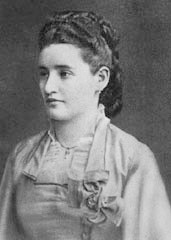
Bertha Pappenheim is the real name of Josef Breuer's patient, "Anna O.," who Breuer and Freud wrote about in Studies on Hysteria (1895).


Saturday, March 1, 2014

Love is Strange -- Mickey & Sylvia (1956)


From a rather odd BBC series, Lipstick on your Collar (1993). Apparently, this was Ewan MacGregor's first paid acting (i.e., lip-syncing and dancing) gig.

Here's the real Mickey & Sylvia: